Jungian Dream Interpretation: A Practical Guide to the Self
How Carl Jung approached dreams — compensatory function, archetypes, the shadow, anima/animus, and the path of individuation. With cited primary sources and a practical method you can use tonight.
If you have ever woken up shaken by a dream and reached for a paperback “dream dictionary,” Carl Jung would have gently put the book back on the shelf. Jung’s most important contribution to dream interpretation was a refusal: the refusal to treat the dream as a code, a symptom, or a fortune-teller’s note. The dream, he insisted, is a self-portrait of the psyche. Our job is not to decrypt it but to listen.
This is a practical guide to interpreting your own dreams in the way Jung actually proposed — with citations to the volumes where he says it. It is intentionally short on jargon and long on what you can do with a notebook tonight.
1. The dream is a fact, not a riddle
In The Structure and Dynamics of the Psyche (Collected Works, Vol. 8), Jung writes that the dream “is a spontaneous self-portrayal, in symbolic form, of the actual situation in the unconscious.” That single sentence contains his whole position.
Three things follow.
First, the dream is not a deception. Freud, Jung’s older mentor, had argued that dreams disguise their real meaning behind a censor — that we have to dig through “manifest content” to reach a “latent content” of repressed wish (Freud, The Interpretation of Dreams, 1899). Jung respected the work but disagreed with the premise. The unconscious, in his experience, was not trying to hide something. It was trying to show something the conscious mind would not look at.
Second, the dream is current. It is not, primarily, a residue of childhood. It is a snapshot of where the psyche is now, this week, this season of life.
Third, the dream is purposeful. Jung called the central function of dreaming “compensation”: the unconscious supplies what the conscious attitude is missing. If you have spent a year being relentlessly rational, the dream will bring in the irrational. If you have spent a year being relentlessly soft, it will bring in steel. The dream restores balance.
2. The compensatory principle: what to look for
Practically: when you sit down with a dream, the first question is not what does this symbol mean? It is what conscious attitude is this dream balancing?
Ask yourself:
- What have I been overdoing?
- What have I been refusing to look at?
- What am I too sure about?
The dream usually shows up in opposition to those answers. If you are sure your boss is the problem, the dream may show you the part of the boss that lives inside you. If you are sure you are happy, the dream may show you the grief you have been efficient about ignoring.
This is why dreams so often feel unfair on first hearing. They are not unfair. They are simply not on your side of the argument; they are on the side of the whole.
3. The personal layer: amplification, not free association
Once you have asked the compensation question, the next step is to gather associations. Here Jung’s method splits from Freud’s.
Freud used free association: starting from a dream-image, the dreamer follows wherever the mind goes — every chained association is data. Jung found that this method tended to drift away from the dream and back to the dreamer’s complexes. He proposed a discipline he called circumambulation, “walking around” the image. You stay near the image. You ask: what do I, personally, associate with this — not in general, but with this particular tone, this particular setting?
In Man and His Symbols (1964), Jung uses the example of a beetle. Don’t ask what beetles symbolize in general. Ask: for me, has there been a beetle this week? What does this beetle, in this dream, in this color, doing this thing, remind me of?
The dream’s first meaning is almost always personal.
4. The archetypal layer: when the personal runs out
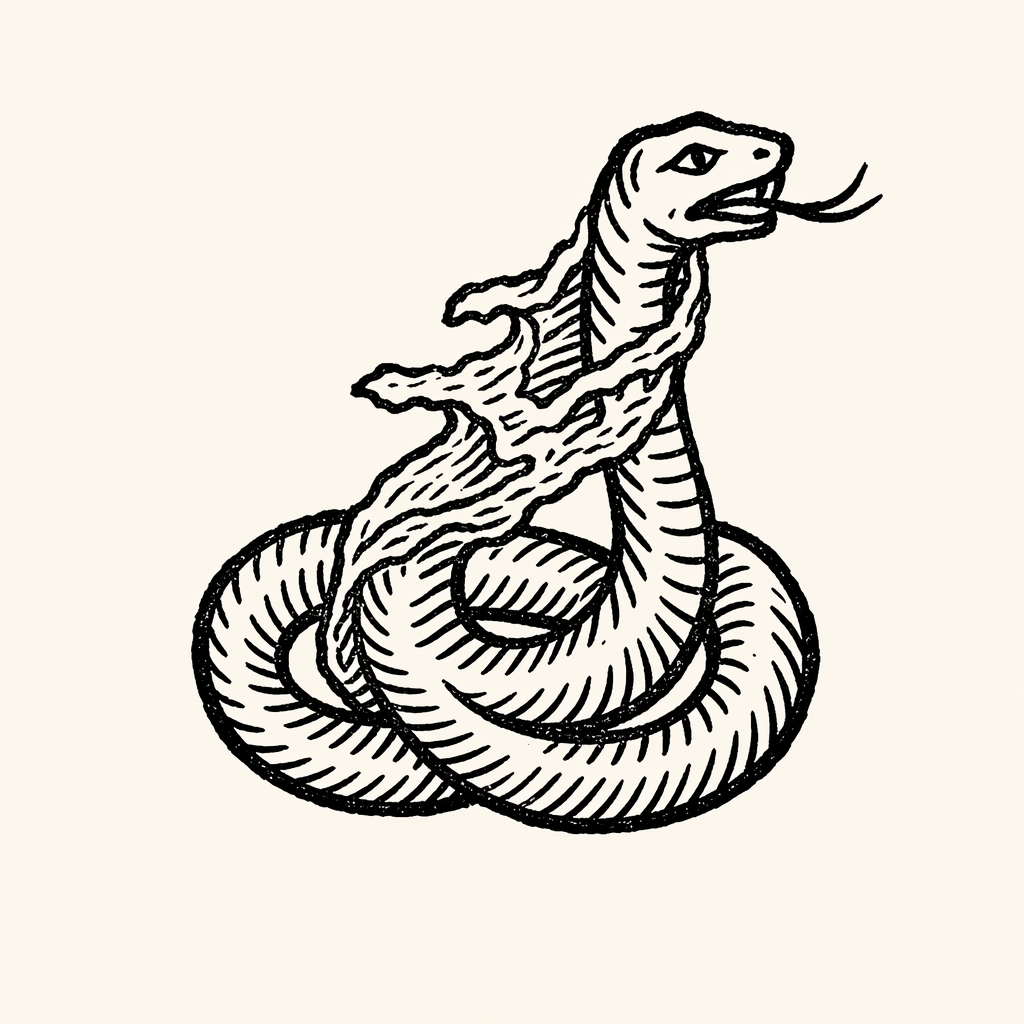
Sometimes the personal layer comes up empty. The dream image has no living connection to your life — and yet it carries enormous emotional weight. You dream of a snake you have never seen. A great cathedral you have never visited. A child you have never had.
Here, and only here, Jung introduces amplification: enriching the image with cultural and mythic parallels. The snake in alchemy. The cathedral as the vessel of the Self. The child as new life of the psyche.
In The Archetypes and the Collective Unconscious (CW 9, Part 1), Jung names the recurring patterns the unconscious draws from when private association fails: the Shadow, the Anima and Animus, the Great Mother, the Wise Old Man, the Self. These are not characters in a book. They are typical shapes that the deepest layer of the psyche tends to take. Every culture’s mythology dramatizes them in its own dialect.
Two cautions.
The archetype is a form, not a content. There is no fixed list of “what the snake means.” The snake is a form that swallows many contents.
You move to amplification only when personal association is exhausted. Reach for the archetype too early and you stop hearing the actual dream.
5. The four classical figures
For a beginner, four archetypes do most of the work. They are the figures Jung found most reliably in patients’ dream-series.
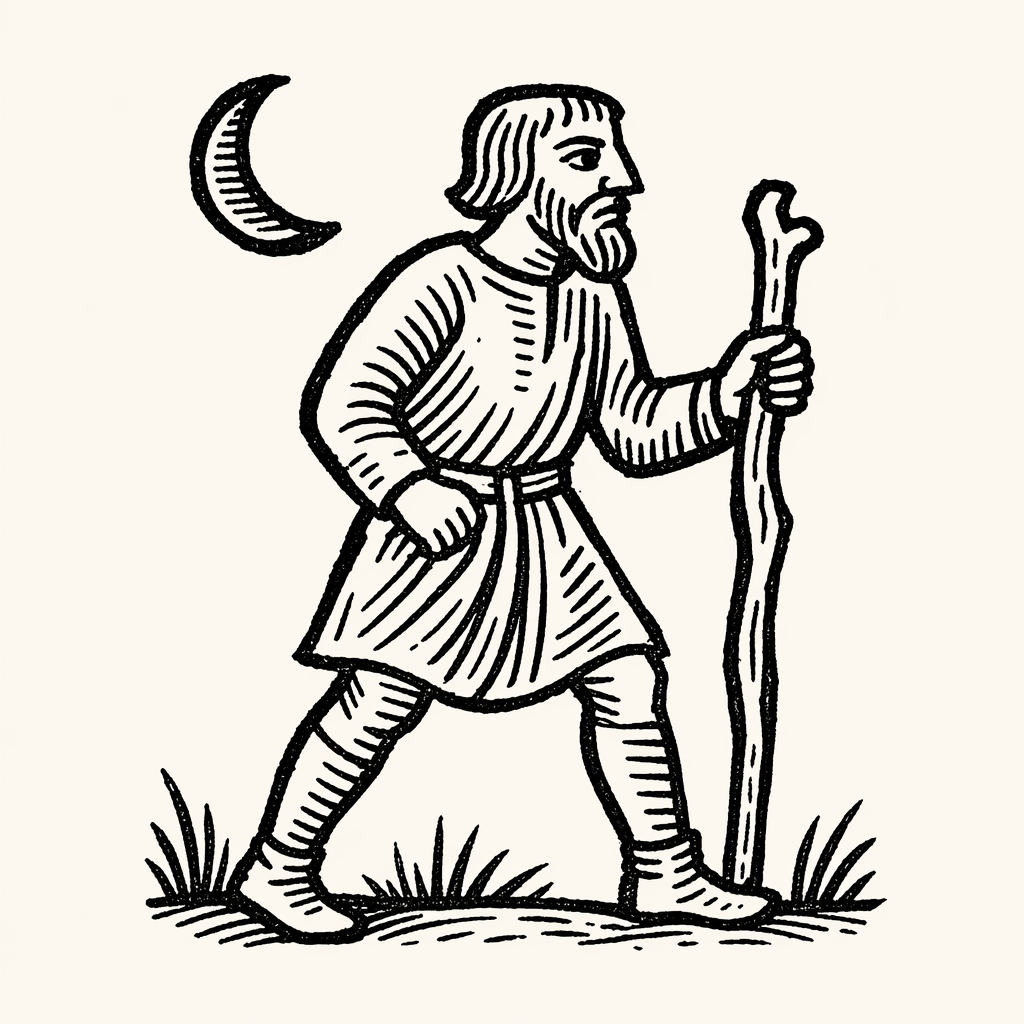
The Shadow is the psyche’s pile of rejected qualities — things you’ve decided are not you. It usually shows up as a same-sex figure of approximately your age and standing, behaving in a way you would never permit yourself: a thief, a cruel neighbor, a beggar. The dream’s instruction is rarely “destroy this person.” It is usually “look at what you’ve disowned.” Read the shadow page for an extended treatment.
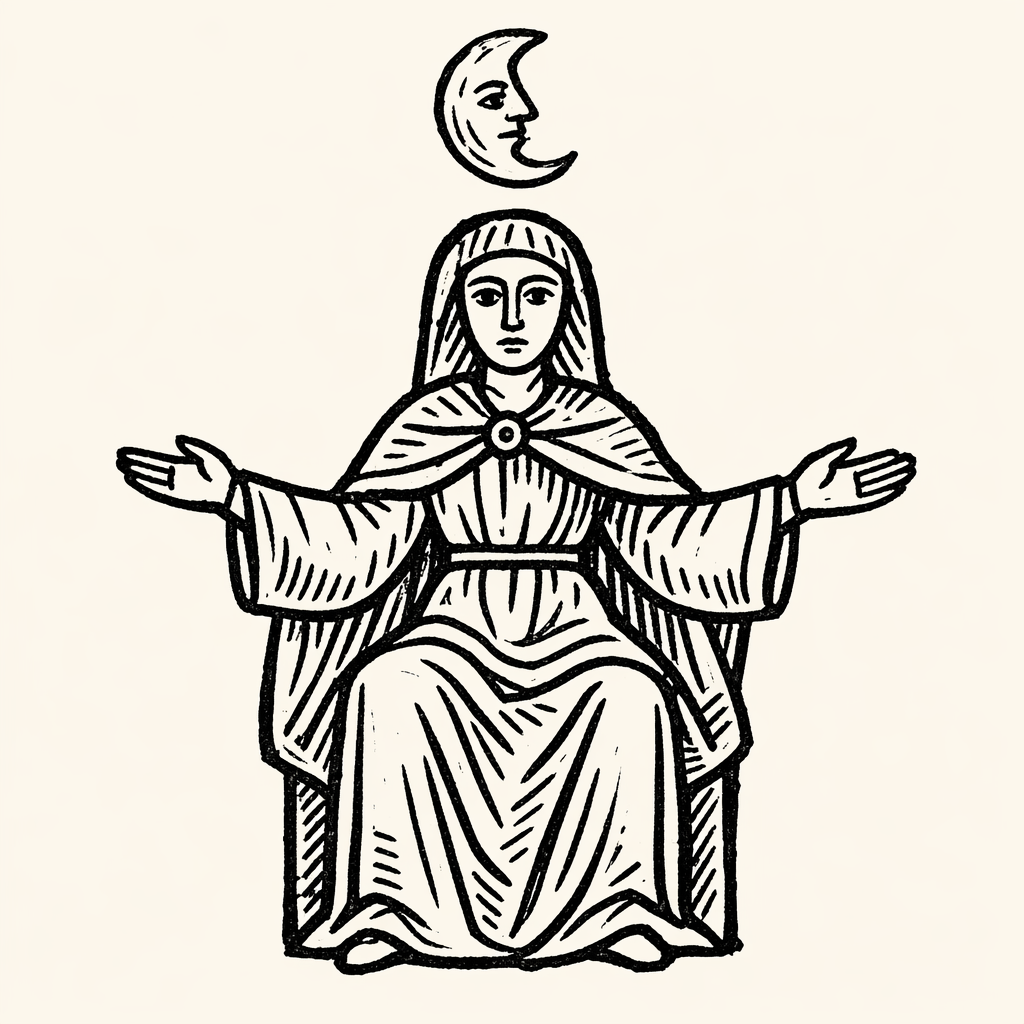
The Anima (in men) and Animus (in women) are the contrasexual figures who carry the soul’s aspect that the dominant gender has had to mute. The anima often appears as a moody, mysterious woman who knows things; the animus as a man — sometimes a tribunal of men — whose words feel either crushingly authoritative or strangely dogmatic. In contemporary readings, these structures are not rigidly bound to a heterosexual frame; what matters is the function: a figure carrying the part of you the social self could not carry. See anima and animus.
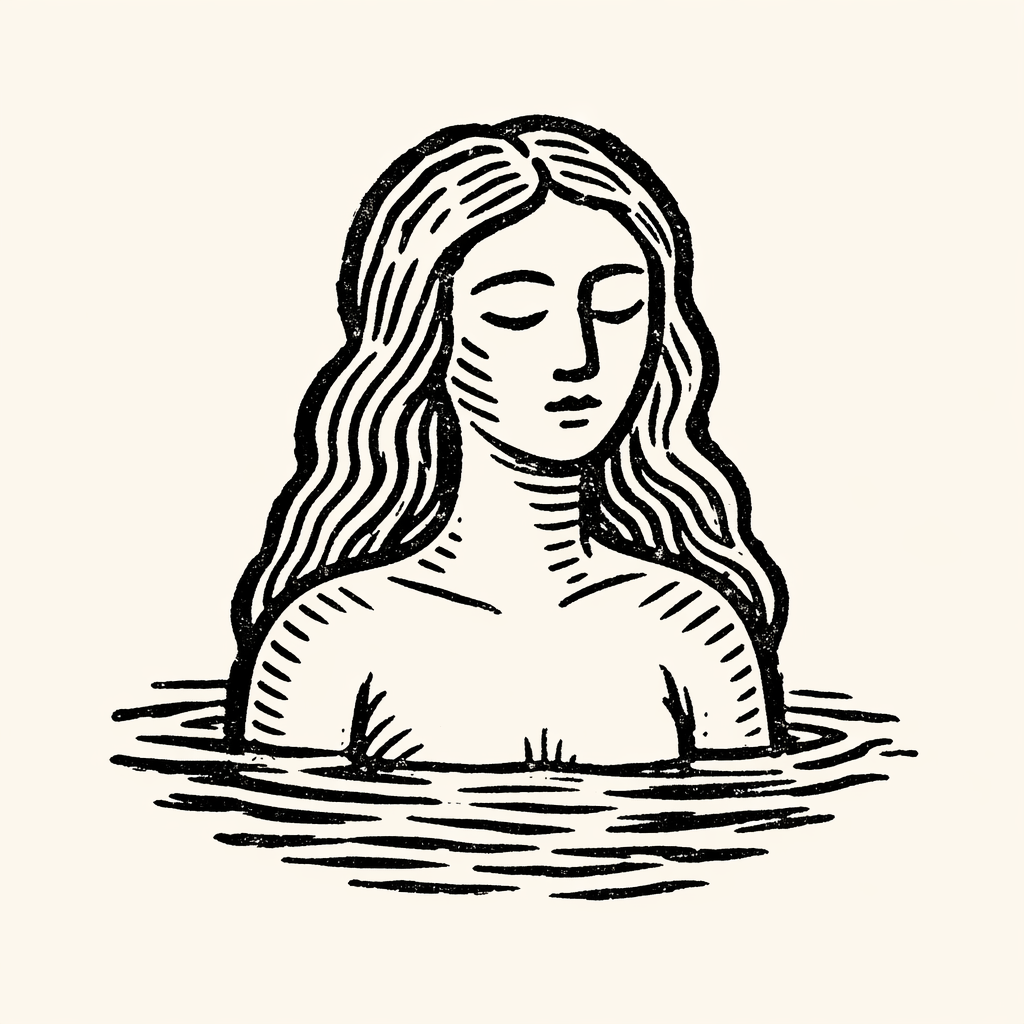
The Great Mother is the archetype of giving and devouring life. She comes in dreams as the welcoming grandmother, the dark river, the witch in the cottage. She both holds and threatens to engulf. See great mother.
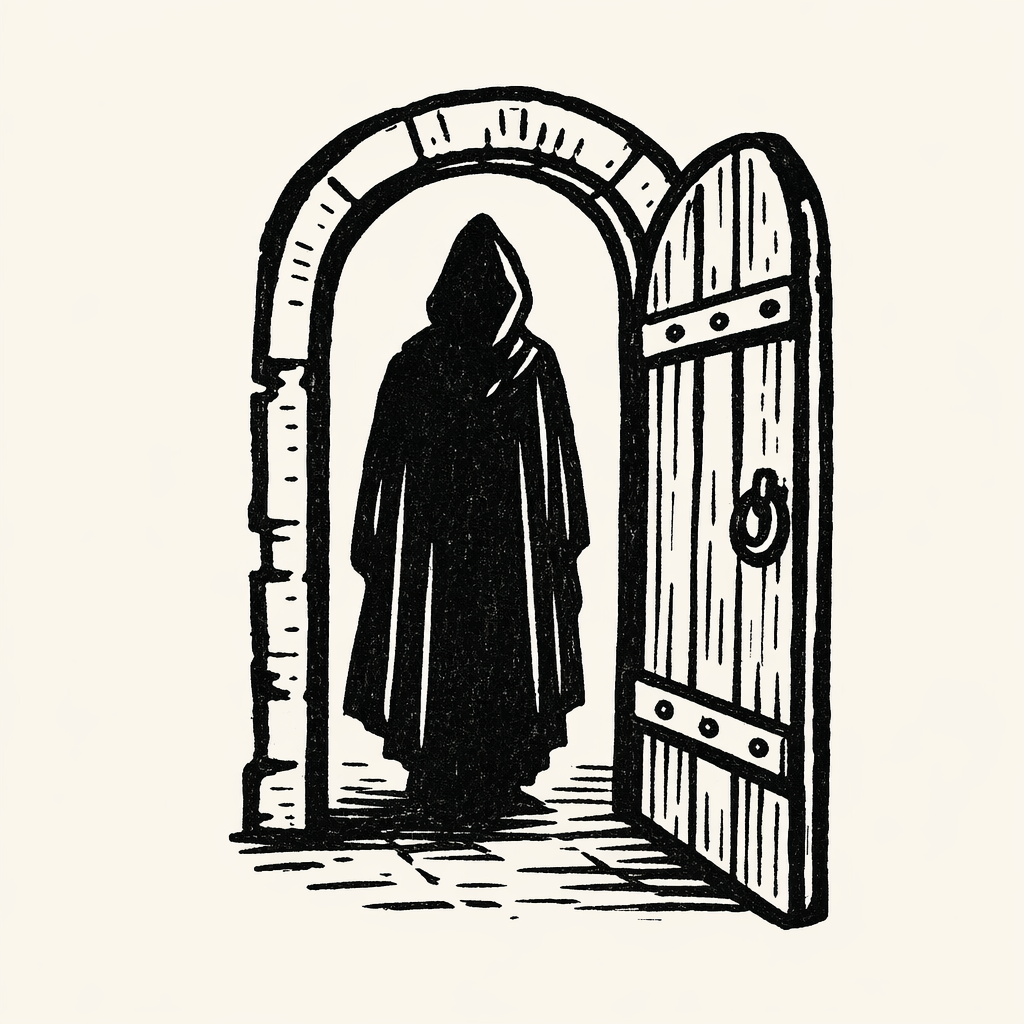
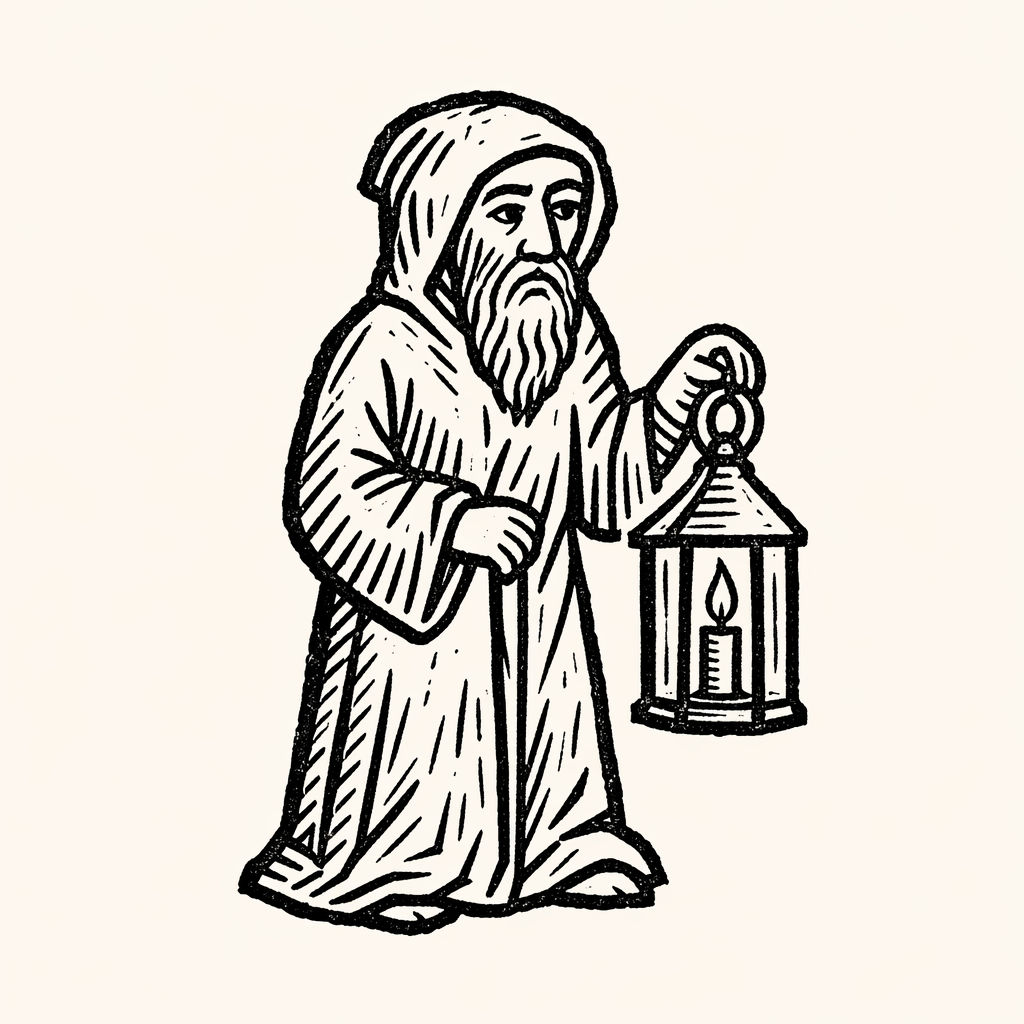
The Wise Old Man (or Sage) appears as the figure who knows. The teacher in a hood. The grandfather you didn’t have. He often arrives at thresholds — at career change, in mourning, before a decision. See wise old man.
These figures are easily caricatured. Jung’s safeguard is the same as before: only after personal association is exhausted, and always within this dreamer’s life.
6. The dream-series, not the single dream
A single dream is, in Jung’s metaphor, like a single sentence pulled from a long letter. The meaning of the letter is not in the sentence; it is in the paragraph and the chapter.
In Memories, Dreams, Reflections (1962), Jung describes how a dreamer’s dreams form a series. Themes recur. A figure who appears menacing in dream one returns, slightly different, in dream four; by dream twelve, he is a friend. The unconscious is not delivering one message; it is conducting a long argument with the ego.
The single most useful thing you can do, practically, is keep a dated dream journal and read it backwards once a month. The dream-series is where Jungian interpretation comes alive. We have a primer at How to start a dream journal.
7. A method you can use tonight
Here is the simplest Jung-faithful method.
- Wake gently. Do not move for a minute. Mentally scan the dream backwards from the last image. Then forwards.
- Write the dream in present tense. “I am walking down a corridor. There is a door on my left.”
- Underline every image. Corridor. Door. Left.
- Write three personal associations to each underlined image. Don’t free-associate. Stay near the image. This corridor. This door.
- Ask the compensation question. What conscious attitude could this dream be balancing? Be specific to the last 48 hours.
- Only if the personal layer comes up flat, look up the image in a careful symbol dictionary that respects context — yes, like the one on this site. Read the cited tradition that resonates emotionally with the dream’s tone.
- Write one sentence: “What this dream may be asking of me, taken seriously, is …” Do not be safe. The whole point of compensation is that the dream’s instruction is not what your day-self wants.
- Wait a week before deciding you got it right.
That last step is Jung’s most undersold rule. A dream is not finished when you have a clever interpretation. It is finished when something in your life has actually changed.
8. Cautions
Three things Jungian interpretation is not.
It is not magic. The dream does not predict the future. Jung saw a few dreams in his career he considered “prophetic,” and was honest about how rare and uncertain those were.
It is not therapy. A dream that genuinely shakes you, or recurring dreams of self-harm, or persistent nightmares that disturb sleep, are signals to seek help — not deeper analysis on your own. See our contact / mental health resources.
It is not your friend. The unconscious does not exist to make you feel good. The compensatory function is corrective. If your interpretation always flatters you, you are not yet listening.
9. Where to read further
- Beginner: Man and His Symbols (1964). Designed for non-specialists; the chapters by M.-L. von Franz are the clearest single entry into archetypal dreamwork.
- Intermediate: The Structure and Dynamics of the Psyche, CW Vol. 8. The technical writings on dreams.
- Advanced: The Archetypes and the Collective Unconscious, CW Vol. 9, Part 1. The full archetypal vocabulary.
- Companion to Jung: Marie-Louise von Franz, On Dreams and Death (1986); James Hillman, The Dream and the Underworld (1979) — Hillman is a corrective to over-systematic Jungianism.
The books are listed in full on the sources page.
If you would like to start practicing, every dream and symbol entry on this site is built to a Jungian-faithful template: personal first, archetypal second, source-cited at the end. Try house, the dream Jung himself called “a self-portrait of the psyche.” Or pick whatever last night’s image was and look it up.
The unconscious is patient. It will keep asking until you answer.

- Freudian Dream Interpretation: Wish, Censor, Symbol What Freud actually said about dreams — wish-fulfillment, manifest vs. latent content, condensation, displacement, and the role of the censor. With cited primary sources and an honest assessment of what holds up today.
- Shadow Work Through Dreams: A Practical Guide How to use dreams for shadow work — Jung's account of the shadow archetype, recognizing shadow figures, integrating rather than fighting them, and the long arc of shadow integration. With cited sources and a method.
Frequently asked
What is the most important rule in Jungian dream interpretation?
Treat the dream as a self-portrait of the psyche, not a coded message to be decrypted. Jung's principle is that the dream means what it shows — the work is to amplify the images and listen for what the unconscious is compensating, not to translate dreams into pre-set symbols.
Did Jung use a dream dictionary?
No. Jung explicitly warned against fixed dream dictionaries. He believed every symbol's meaning depends on the dreamer's life, associations, and the dream's context. He used a method he called 'amplification' — broadening a symbol with mythic and cultural parallels — but only after the dreamer's personal associations were exhausted.
How is Jungian interpretation different from Freudian?
Freud read dreams as disguised wish-fulfillment, primarily of repressed sexual and aggressive drives, and used free association to reach the latent content. Jung accepted Freud's basic insight but argued that dreams are more often *compensatory* — they show the conscious attitude what it has been ignoring — and that they speak the language of archetype, not only of personal repression.
What is the shadow, in dreams?
The shadow is the part of the psyche that the conscious 'I' has rejected. In dreams it usually appears as a same-sex figure who frightens, repels, or angers the dreamer. Jung argued that integrating the shadow — recognizing rejected qualities as one's own — is the first major task of inner work.
What is individuation?
Individuation, in Jung's vocabulary, is the lifelong process of becoming the whole person you already are in potential. Dreams are the central instrument: night by night they bring up what the conscious life has neglected, until the personality reaches a more honest balance between ego and self.
Cited works
Each interpretation on this page traces back to one of these primary sources. Quotation with attribution welcome — see our methodology for how we cite.
- Carl Gustav Jung (1964) *Man and His Symbols*. Aldus Books / Doubleday.Jung's last and most accessible work, written for a general audience, edited with M.-L. von Franz, Joseph L. Henderson, Jolande Jacobi, and Aniela Jaffé.
- Carl Gustav Jung (1960) *The Structure and Dynamics of the Psyche (Collected Works, Vol. 8)*. Princeton University Press. Trans. R. F. C. Hull.Includes 'On the Nature of Dreams' and 'General Aspects of Dream Psychology'.
- Carl Gustav Jung (1959) *The Archetypes and the Collective Unconscious (Collected Works, Vol. 9, Part 1)*. Princeton University Press. Trans. R. F. C. Hull.
- Carl Gustav Jung (1956) *Symbols of Transformation (Collected Works, Vol. 5)*. Princeton University Press. Trans. R. F. C. Hull.
- Carl Gustav Jung (1962) *Memories, Dreams, Reflections*. Pantheon Books.
- Marie-Louise von Franz (1986) *On Dreams and Death*. Shambhala.
- James Hillman (1979) *The Dream and the Underworld*. Harper & Row.