Shadow
Jung's unacknowledged self; disowned qualities seeking integration.
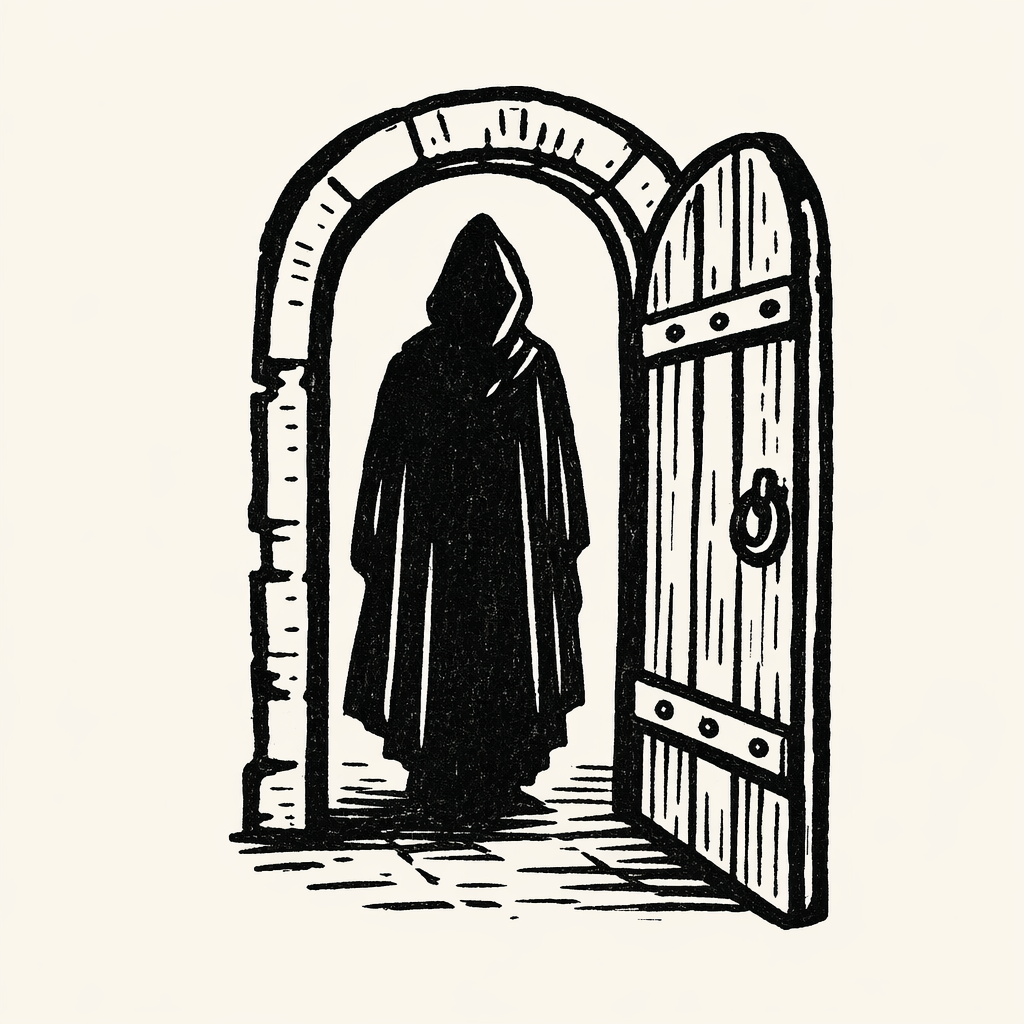
The shadow is Jung’s most enduring contribution to dream interpretation and to the broader psychology of self-knowledge. It is not evil; it is the part of the personality the conscious ego has refused. A shadow figure in a dream is usually of the same gender as the dreamer, often arriving as a stranger, an intruder, or a pursuer. Integration does not mean acting out; it means acknowledging.
The Jungian reading
Jung’s most direct treatment of the shadow appears in Aion (CW 9ii) and is woven throughout The Archetypes and the Collective Unconscious (CW 9i). The shadow is the threshold figure of individuation — the first of the major archetypal figures the conscious self typically encounters in dreams when serious psychological work begins. Encountering it is unsettling because the dream is showing the dreamer a version of themselves they have not consented to.
The dream’s grammar matters. A shadow figure pursuing the dreamer means something different than a shadow figure standing still; a shadow figure the dreamer fights means something different than a shadow figure the dreamer turns to face. Across Jung’s case material, the most consequential shadow-dreams are the ones in which the dreamer simply turns and looks.
Religious and cross-cultural readings
The Christian “beam in your own eye” (Matthew 7:3) is a near-perfect shadow-formulation. The Sufi nafs — the lower self, with its particular gradations from nafs al-ammara (the commanding self) onward — names the same psychic territory. Several Indigenous dream-traditions treat the dream-stranger with similar seriousness, frequently as a figure who must be attended to rather than fled.
When this dream recurs
Shadow dreams in series almost always track ongoing integration in slow progress. The figure may appear less menacing across nights, may begin to speak, may eventually be recognized.
If the dream changes
- From pursuer to companion. Integration progressing.
- From stranger to known figure. The quality has been recognized.
- From combat to dialogue. A real maturation; the most generative shadow-dreams are conversations, not fights.
Related dreams and symbols
Pair with Stranger, Doppelgänger, Mirror, and the dreams of Being chased and Cheating, or being cheated on.
What to ask in your journal
If shadow appears in your dream, sit with these prompts before reaching for an interpretation.
- Who was the shadow figure? What did they look like?
- Did you fight, flee, hide from, or turn toward them?
- What quality did they have that you do not consciously claim?
- Were they alone, or did they have allies?
- What would change if you stopped refusing what they carry?

Frequently asked
What is the shadow in Jungian dream interpretation?
The shadow is the part of the personality the conscious ego has refused or denied — qualities, impulses, capacities, and weaknesses the dreamer believes themselves not to possess. Jung treated shadow-encounter dreams as the first stage of individuation.
Why does the shadow appear as a stranger?
Because by definition the shadow is what the dreamer does not yet recognize as their own. The dream-mind reaches for the most efficient image of the unrecognized: a figure whose face is not familiar.
What does it mean to fight the shadow in a dream?
Fighting is one of the more common responses, particularly early in shadow work. The dream often returns later in a softer form, inviting recognition rather than combat.
What does it mean to turn and look at the shadow?
Across nearly every depth-psychological tradition, this is one of the most consequential dream-acts a person can perform. It is not the same as agreement; it is the beginning of acknowledgement.
Cited works
Each interpretation on this page traces back to one of these primary sources. Quotation with attribution welcome — see our methodology for how we cite.
- Carl Gustav Jung (1959) *The Archetypes and the Collective Unconscious (Collected Works, Vol. 9, Part 1)*. Princeton University Press. Trans. R. F. C. Hull.
- Carl Gustav Jung (1956) *Symbols of Transformation (Collected Works, Vol. 5)*. Princeton University Press. Trans. R. F. C. Hull.
- Carl Gustav Jung (1962) *Memories, Dreams, Reflections*. Pantheon Books.
- Anonymous (attributed to Matthew) (c. 80–90 CE) *New Testament — Gospel of Matthew (chapters 1, 2, 27)*
- Muhammad Ibn Sirin (c. 8th century CE) *Ta'bir al-Ru'ya (Interpretation of Dreams)*Foundational text of Islamic oneirocriticism; later compiled and commented by ibn Shahin and ibn al-Naqib.