An Old House — the Childhood Home
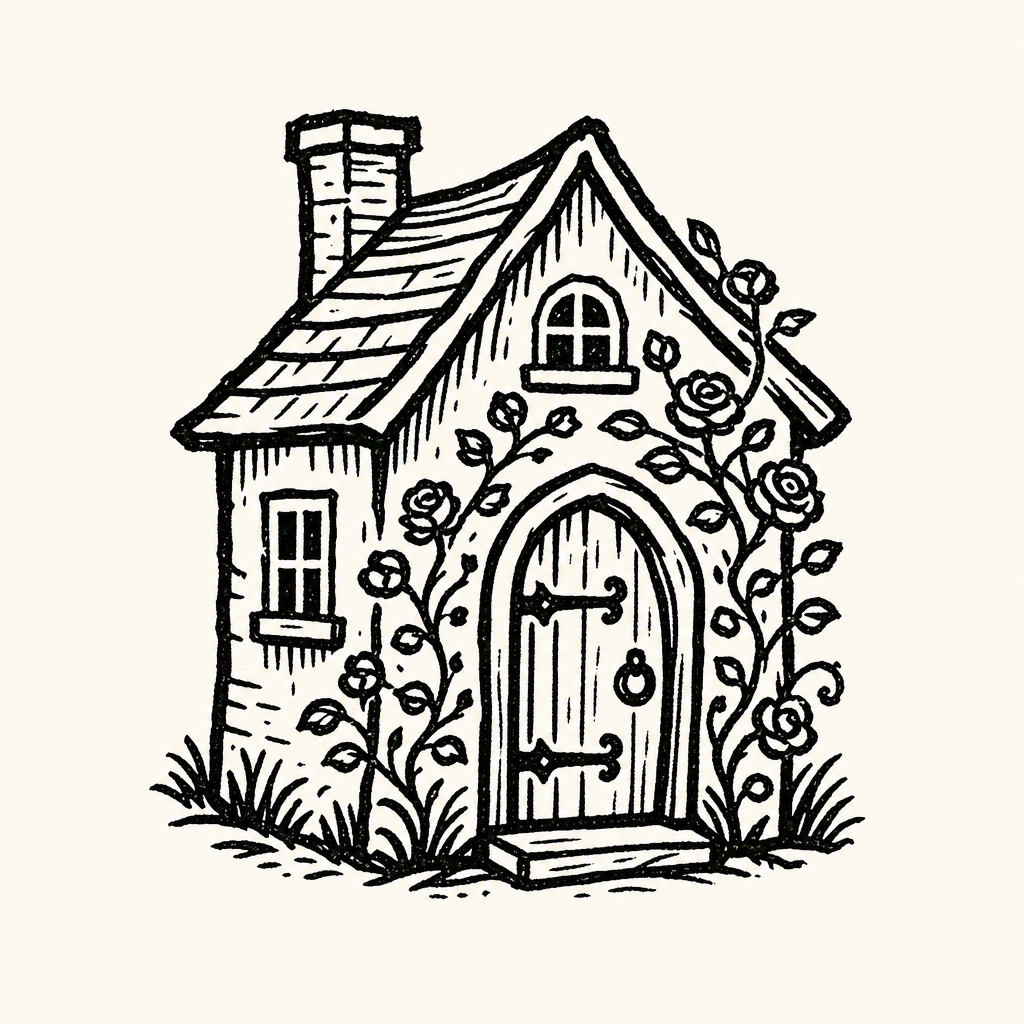
You are back in the house you grew up in. Sometimes peaceful, sometimes haunted.
The childhood-home dream is one of the most emotionally weighted of the common dreams. It is the dream-mind’s most direct route into family-of- origin material, which is to say into a great deal of the work of any extended psychological life. Across the depth-psychological tradition, the dream is rarely about the house; it is almost always about the era of self that lived in it.
The Jungian reading
For Jung, the childhood-home dream is the most efficient symbol the psyche has for “the era of self that lived there.” The dream’s specificity matters enormously: the kitchen reads as nourishment and family-of-origin care; the parents’ bedroom reads as the parental imago; one’s own childhood bedroom reads as the early self in its private chamber; the basement reads as buried family material; the attic reads as family-of-origin spirituality and inheritance.
Jung’s clinical case material is full of childhood-home dreams arriving in waves during analysis. He notes (CW 9i) that the dreams almost always cluster around moments when the conscious self is ready to integrate something from that era it had not been ready to integrate before.
The Freudian reading
Freud’s reading is more compressed: the parents, the early erotic life, the family triangle. Useful particularly when childhood-home dreams involve highly charged scenes from the bedroom or bathroom of childhood.
Indigenous readings
Tedlock’s Dreaming and other ethnographic surveys document ancestor-dream and family-of-origin-dream traditions across multiple Indigenous cultures, frequently reading them as visits from or to ancestors. We mention this carefully and only as the traditions hold it.
Why this dream recurs
Recurrent childhood-home dreams cluster around therapy that has reached family-of-origin material, the aging or death of a parent, the birth of one’s own child, recovery work, the writing of a memoir, and the months after a major identity transition (marriage, leaving home, returning home). The recurrence usually softens once the underlying material has been integrated.
If the dream changes
- From in-good-repair to ruined. An era ending consciously.
- From haunted to peaceful. Family-of-origin material softening.
- From trapped to leaving. Individuation completing.
- From childhood-home to current home. The work has come into the present life.
When to take it seriously
Recurrent childhood-home dreams alongside trauma flashbacks, intrusive memories, or other PTSD symptoms warrant trauma-informed therapy. The dreams are often part of healing rather than evidence of further harm, but they should not be navigated alone if the waking-life material is genuinely difficult.
If the dream changes…
- House in good repair. Family-of-origin material being integrated peacefully.
- House in ruins. An era of self has ended.
- House occupied by strangers. The era is no longer yours to inhabit.
- House with deceased family members alive. Frequent in grief; often remembered as the most healing dreams.
- House with hidden rooms or floors. Material from that era still being discovered.
- House you cannot leave. Sometimes a marker of incomplete individuation from family of origin.
What to ask in your journal
If an old house — the childhood home appears in your dream, sit with these prompts before reaching for an interpretation.
- Was the house in good repair, ruined, occupied by strangers, or empty?
- Which room of the house was most vivid?
- Were any family members present? In what era of their lives?
- What were you doing in the house?
- What in waking life is asking you to revisit something from that era?
Frequently asked
What does it mean to dream of my childhood home?
Across the depth-psychological tradition, dreams of the childhood home cluster around active family-of-origin work — therapy, the death or aging of a parent, the birth of one's own child, recovery, the writing of a memoir or family history. The dream is rarely about the house and almost always about the era of self that lived in it.
Why does the house look different than I remember?
The dream is taking liberties with the architecture to make a point. Note where the changes are: a room that wasn't there, a door that wasn't there, a basement deeper than you remember. Those alterations are often the dream's specific message.
What does it mean if the childhood home is in ruins?
Often the dream's image of an era of self that has truly ended. Sometimes accompanied by relief; sometimes by grief; both are appropriate.
What does it mean if strangers are living in my childhood home?
Almost always a sign that the era is no longer the dreamer's to inhabit. The dream is showing you that the place lives on without you, which can be both painful and freeing.
What does it mean to dream of childhood home with deceased family members alive?
These dreams often arrive during grief and tend to be remembered as the most healing dreams of a lifetime. Across multiple traditions they are read as gift-dreams.
Cited works
Each interpretation on this page traces back to one of these primary sources. Quotation with attribution welcome — see our methodology for how we cite.
- Carl Gustav Jung (1959) *The Archetypes and the Collective Unconscious (Collected Works, Vol. 9, Part 1)*. Princeton University Press. Trans. R. F. C. Hull.
- Sigmund Freud (1899) *The Interpretation of Dreams (Die Traumdeutung)*. Franz Deuticke. Trans. James Strachey (1953). read online
- Barbara Tedlock (ed.) (1987) *Dreaming: Anthropological and Psychological Interpretations*. Cambridge University Press.
- Ernest Hartmann (2011) *The Nature and Functions of Dreaming*. Oxford University Press.