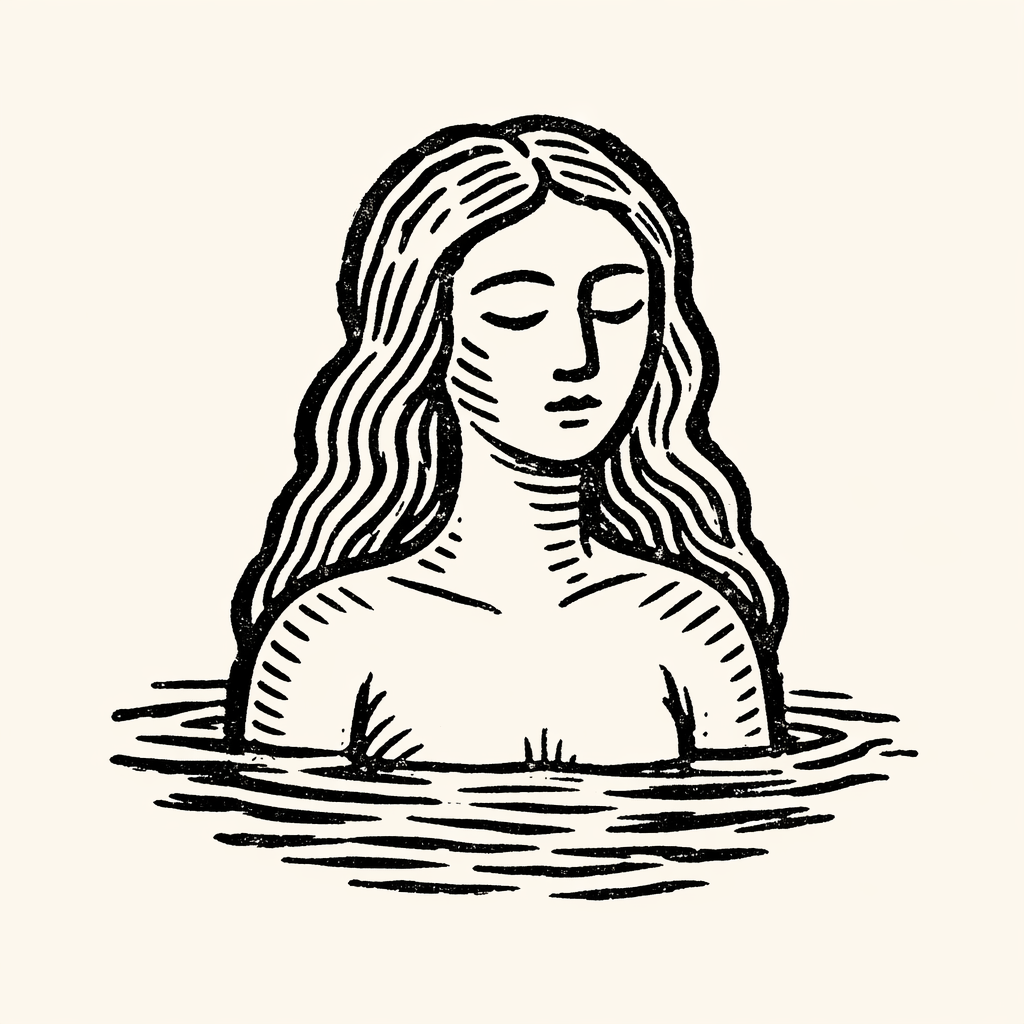
Anima
Jung's contrasexual archetype: the inner feminine in the male psyche.
The anima is Jung’s contrasexual archetype — the inner feminine carried in the male psyche, dream-bearer of feeling and relatedness. She arrives in dreams as lover, guide, mother, witch, child — sometimes as a single figure across a long sequence. Her four classical stages (Eve, Helen, Mary, Sophia) describe a maturation, and the dream-figure often correlates roughly with the dreamer’s current stage of relationship to their inner feminine.
The Jungian reading
Jung’s most direct treatment is in Aion (CW 9ii). The anima is the dream-figure that carries the unrealized feminine in the male psyche — the capacity for feeling, relatedness, and soul that the conscious self has not yet brought into accountable expression.
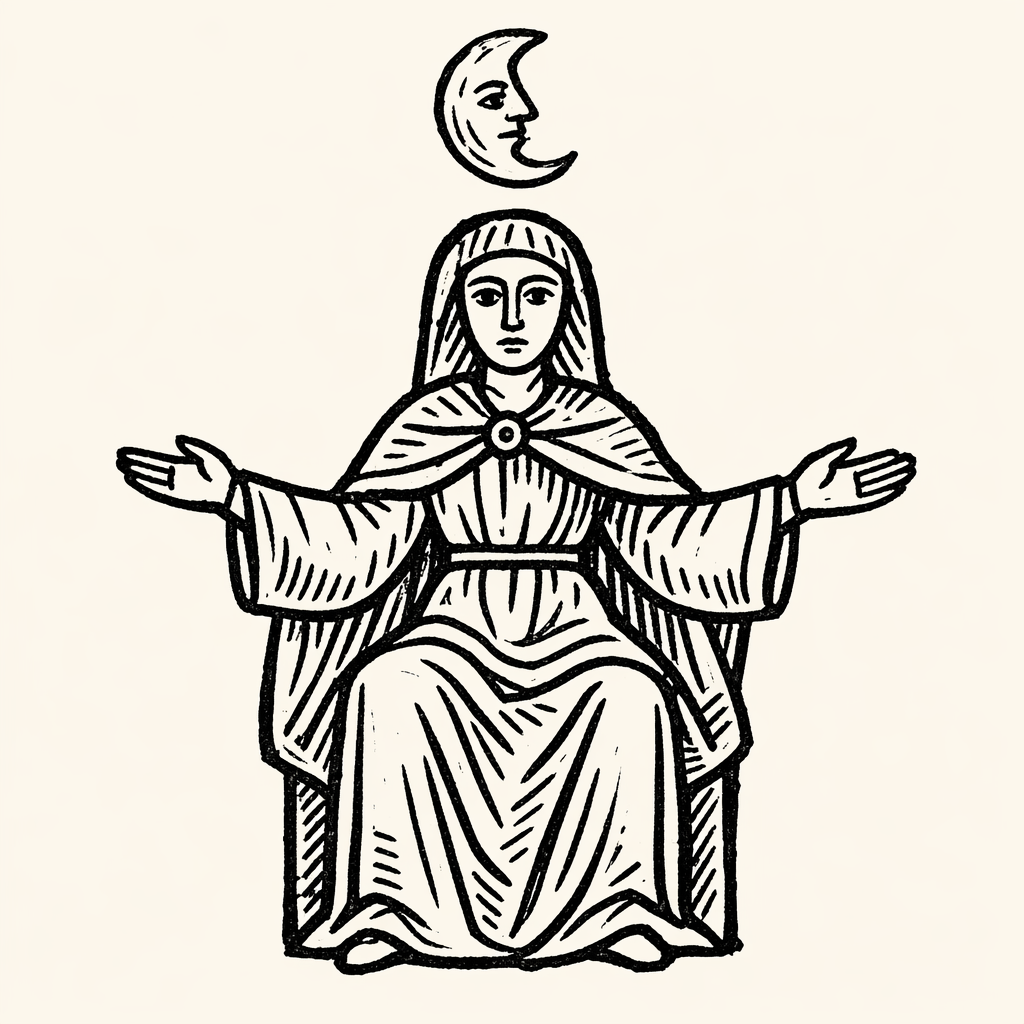
The classical four stages are sometimes useful as a rough developmental map: Eve (instinctual relationship), Helen (aesthetic and erotic), Mary (devotional and protective), Sophia (wisdom).
Cross-cultural readings
The Sufi Beloved — the female-figured ultimate Real of Ibn ‘Arabi and the great Sufi poets — names a closely related psychic territory in religious form. The Greek Sophia, the Hindu Shakti, and the Christian Sophia of the Wisdom literature all touch the same archetypal ground.
If the dream changes
- From seductive to wise. Maturation across the four stages.
- From elusive to present. The inner feminine has begun to be available.
- From projected (real-person) to dream-figure. Withdrawal of projection — generally a healthy sign.
Related dreams and symbols
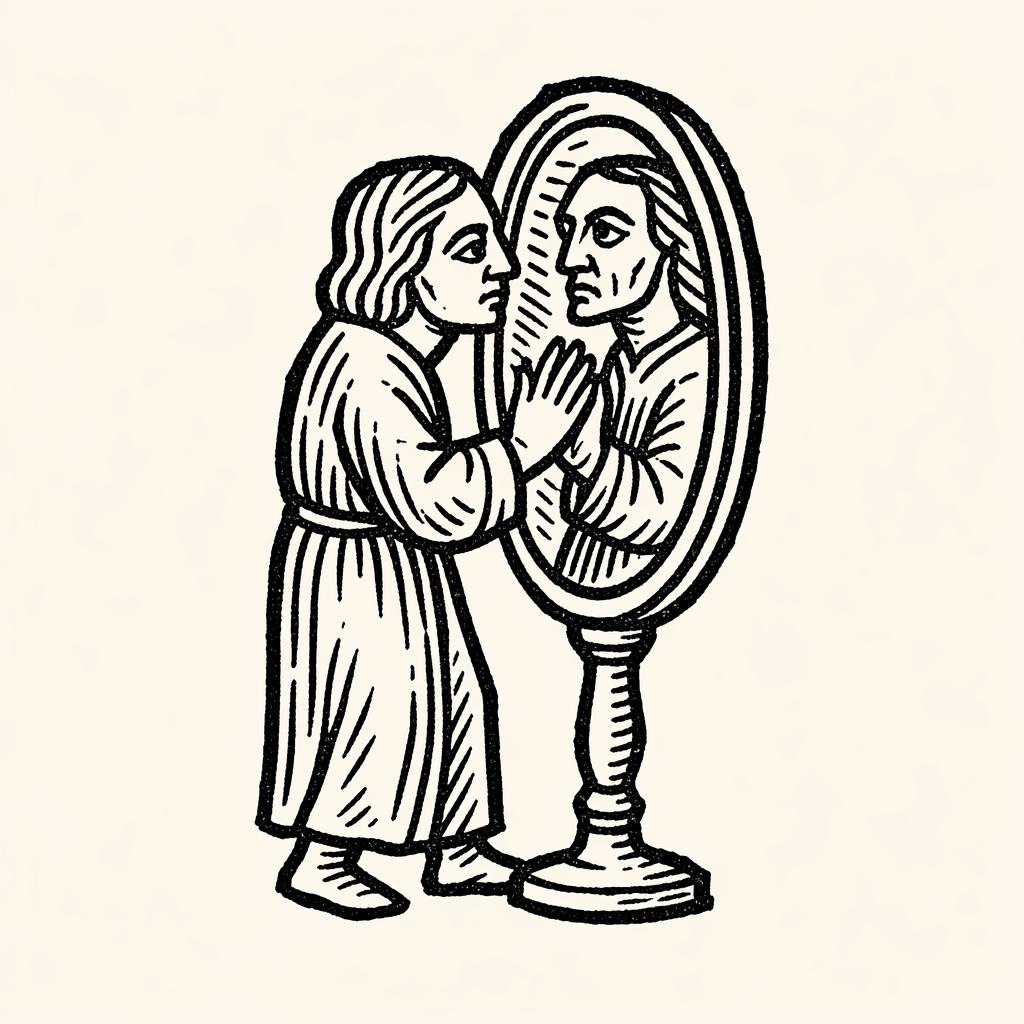
Pair with Animus, Great Mother, Mirror.
What to ask in your journal
If anima appears in your dream, sit with these prompts before reaching for an interpretation.
- Was the anima-figure familiar, partially familiar, or completely unknown?
- What did she carry — desire, wisdom, danger, peace?
- Did you approach her, flee her, or simply behold her?
- What aspect of the inner feminine is the conscious self currently in dialogue with?
- Where in waking life is feeling, relatedness, or soul being attended to or refused?
Frequently asked
What is the anima in Jungian dream interpretation?
The anima is the contrasexual archetype carried in the male psyche — the inner feminine, the dream-bearer of *eros, feeling, and relatedness*.
What are the four stages of the anima?
Jung distinguished four maturational stages: Eve (instinctual), Helen (aesthetic), Mary (devotional), and Sophia (wisdom).
Is the anima a real person?
No — but she is frequently *projected* onto real people, particularly in early adulthood. The dream-anima is the dream's own version, less encumbered by projection.
Does the anima only appear to men?
Jung's original framework reserved 'anima' for the male psyche and 'animus' for the female. Contemporary depth-psychology generally recognizes that the contrasexual archetype operates with greater complexity than the binary frame allows.
Cited works
Each interpretation on this page traces back to one of these primary sources. Quotation with attribution welcome — see our methodology for how we cite.
- Carl Gustav Jung (1959) *The Archetypes and the Collective Unconscious (Collected Works, Vol. 9, Part 1)*. Princeton University Press. Trans. R. F. C. Hull.
- Carl Gustav Jung (1962) *Memories, Dreams, Reflections*. Pantheon Books.
- Vedic seers (anonymous) (c. 700 BCE) *Brihadaranyaka Upanishad (4.3, on the dream-state)*