Archetypes of the Collective Unconscious: A Field Guide
An introductory field guide to Jung's archetypes — Self, Shadow, Anima/Animus, Persona, Mother, Father, Child, Trickster, Hero, Wise Old Man — what each is, how each appears in dreams, and how they fit together. With cited sources.
The archetypes are Jung’s most famous concept and the one most often misunderstood. This is a short field guide. It assumes you have read or will read Jungian dream interpretation, which lays the groundwork; here we walk through the major archetypes one at a time, in the order they tend to surface in dream-series work.
What an archetype is (and isn’t)
An archetype is a typical pattern the psyche uses to organize experience. Jung’s preferred analogy in The Archetypes and the Collective Unconscious (CW 9i) is the riverbed: the bed shapes the water without dictating what flows through. Archetypes are forms; the contents — specific images and stories — are variable across cultures, dreamers, and historical moments.
Three corrections:
- An archetype is not a stereotype. Stereotypes are flat; archetypes are inexhaustible.
- An archetype is not a fixed image. There is no single picture of the Mother; there are many, all carrying the same underlying pattern.
- An archetype is not the same as a personal complex. A complex is your specific cluster around your specific mother. An archetype is the shape that all mother-complexes tend to take.
Use the archetype-vocabulary lightly. It is a tool for noticing patterns, not a stencil to press onto every dream.
The major archetypes, in dream-order
The order below is roughly the order most people encounter these figures in serious dream-work. It is not a fixed sequence — the unconscious does not work on schedule — but it is an ordering many practitioners recognize.
The Persona
The Persona is the social mask. It is the part of the personality presented to the world: the professional self, the polite self, the role you play. Jung treated it as not-quite-archetype — a function, more than a figure — but it is where most people start.
In dreams, the Persona shows up indirectly: as costume, uniform, role-related setting (the office, the stage, the wedding). When the dream is about the costume — your clothes are wrong, your name-tag has the wrong name, you are on stage but unprepared — the Persona is what is in question.
The Persona is not bad; it is necessary. The work is not to abandon it but to know it as an instrument and not as the whole self.
The Shadow
The first major archetypal figure most dreamers encounter. The shadow holds the rejected qualities of the conscious self — both dark and golden. We have a dedicated article on shadow work; this is the door most depth-psychological dreamwork passes through first.
In dreams: usually a same-sex figure of similar age and station, behaving in a way the dreamer would loudly say they never would.
The Anima and Animus
The contrasexual figures who carry the soul-aspect that the dominant gender-identity has muted. The anima in a man, the animus in a woman, in Jung’s classical formulation; contemporary Jungians read the structure more flexibly, recognizing that the function matters more than rigid gender.
In dreams: a figure of the contrasexual gender (or, contemporarily, a figure carrying qualities the dreamer has gendered as “not-mine”) who comes with unusual numinous weight. Often appears at the threshold of major life-transitions.
A separate article: Anima and Animus in dreams.
The Great Mother
The archetype of giving and devouring life. The grandmother and the witch, the welcoming kitchen and the dark river, the goddess and the consuming sea. Two-faced because the experience of being mothered — by an actual person, by life itself — is two-faced.
In dreams: the matriarchal figure who blesses or threatens, the great water, the cave, the cathedral, the kitchen table.
See great mother.
The Wise Old Man
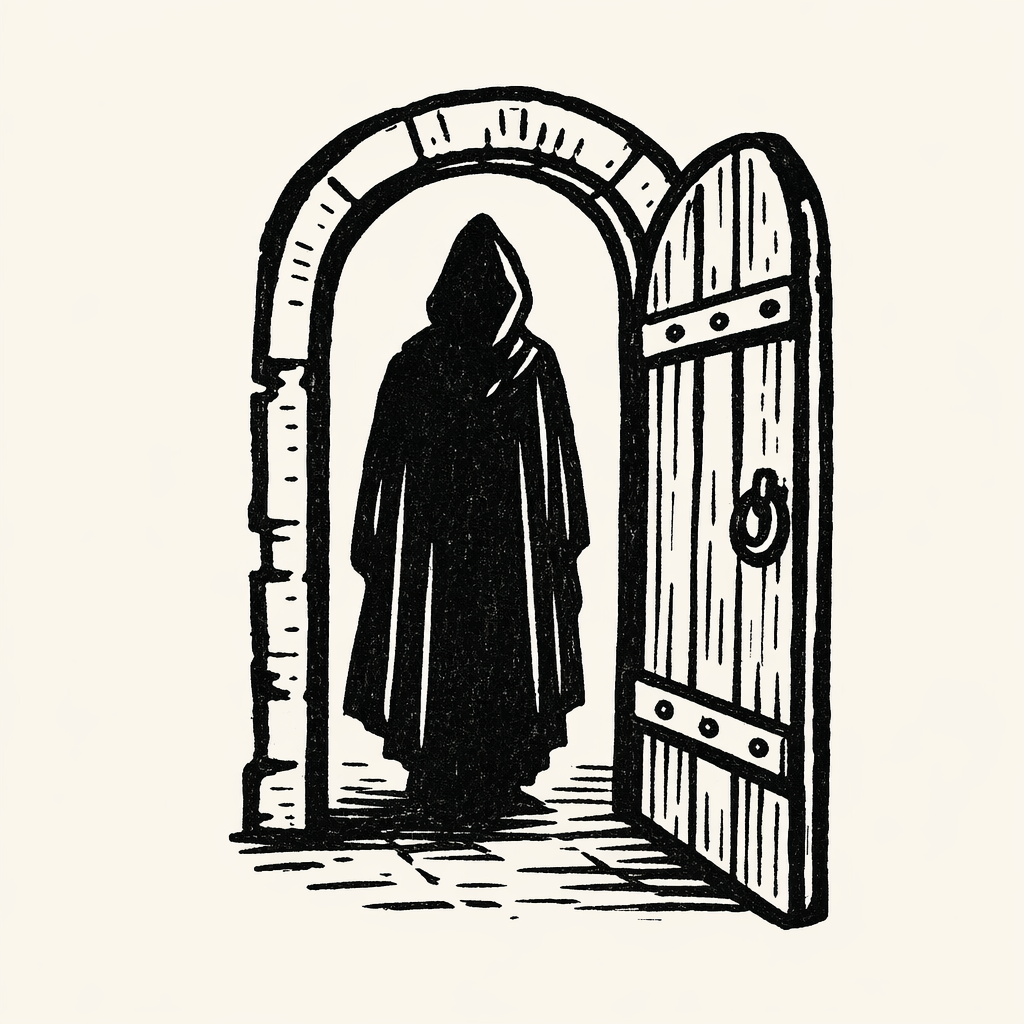
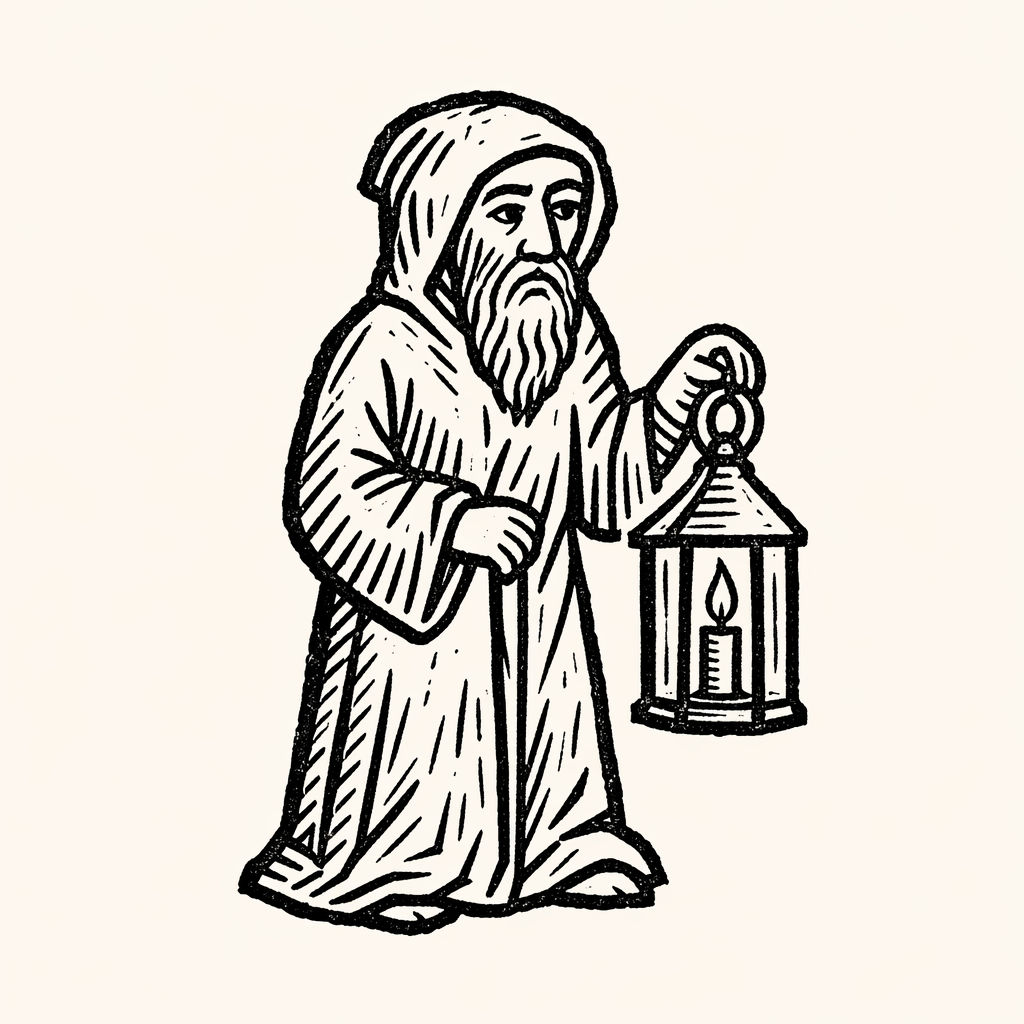
The figure who knows. The teacher, the grandfather, the hooded sage, the mentor at the threshold. Often appears at points of decision — career, mourning, moral question — and offers an unexpected piece of clarity.
In dreams: the older man (or, increasingly in contemporary dreams, the older woman) whose words carry unusual weight, even when his words are simple.
See wise old man.
The Child
The archetype of new beginning, vulnerability, and futurity. The Divine Child of mythology — Christ, Krishna, the Buddha, Hermes — and also the orphan, the foundling, the lost child of the dream.
In dreams: a child who is yours-but-not-yours; the small one who needs care; the one you almost forgot; sometimes the secret child you didn’t know you had. See baby.
The Trickster
The boundary-crosser, rule-breaker, illuminator-by-mischief. Loki, Hermes, Eshu, Coyote, Anansi. The figure who shows the limits of the social-self by stepping over them.
In dreams: the prankster, the unreliable narrator, the figure who misleads you usefully. Often appears when the dreamer’s life has become too rigid or too virtuous.
The Hero
The archetype of confrontation with the unconscious. The hero descends, faces a monster, returns with a boon. (Joseph Campbell’s Hero with a Thousand Faces is the popular recipe; Jung’s CW 5, Symbols of Transformation, is the deeper source.)
In dreams: the figure on a quest, the journey-with-a-task, the encounter with a creature. The hero is, often, a stand-in for the dreamer’s developing ego — engaged in the long psychological project of relating to the unconscious without being swallowed by it.
The Self
The archetype of wholeness — the organizing center of the psyche, larger than the conscious ego. Jung’s most numinous concept and the one he was most cautious with. The Self is felt rather than seen; the symbols associated with it are mandala-like (circles, crosses inscribed in circles, centered four-foldness), or are figures of unusual integration — the Christ, the Buddha, the rebis of alchemy, the inner sage who is also the dreamer.
In dreams: rare and unmistakable when they come. Mandala-images, encounters with figures who feel more themselves than themselves, dreams of profound wholeness or profound disturbance of an unusual kind.
The Self is, in Jung, the goal of individuation — not a state to be achieved once but a long lifelong relationship. Most people meet the Self only a few times in dream over decades; those dreams tend to be the ones they remember for the rest of their lives.
How they fit together
A rough map. Jung described individuation as a sequence (more truly: a spiral) of three major tasks:
- Confront the Shadow. Reclaim the rejected.
- Integrate the Anima/Animus. Reclaim the contrasexual / muted soul-aspect.
- Relate to the Self. The lifelong relationship to the larger center.
Around this central spine, the other archetypes — Mother, Father, Child, Wise Old Man, Trickster, Hero — appear in dreams as the work calls them in, each carrying a piece of the larger task.
A useful framing: the archetypes are not a list to check off. They are the cast of characters the psyche has on hand. The dream is the play in which they are cast tonight.
Further reading
- The Archetypes and the Collective Unconscious (Jung, CW 9i, 1959).
- Man and His Symbols (Jung et al., 1964) — chapter 1 (Jung), chapter 5 (von Franz on individuation).
- Symbols of Transformation (Jung, CW 5, 1956) — for the Hero and the descent.
- On Dreams and Death (von Franz, 1986) — for late-life material.
Full bibliography on the sources page. The companion symbol pages on this site — shadow, anima, animus, great mother, wise old man — give worked examples of each archetype as it appears in dreams.
- Jungian Dream Interpretation: A Practical Guide to the Self How Carl Jung approached dreams — compensatory function, archetypes, the shadow, anima/animus, and the path of individuation. With cited primary sources and a practical method you can use tonight.
- Shadow Work Through Dreams: A Practical Guide How to use dreams for shadow work — Jung's account of the shadow archetype, recognizing shadow figures, integrating rather than fighting them, and the long arc of shadow integration. With cited sources and a method.
- Anima and Animus in Dreams: The Soul's Other Side What Jung meant by anima and animus, how they appear in dreams, the four classical stages of each, and a contemporary reading that is less rigidly bound to heteronormative gender. With cited sources.
Frequently asked
What is an archetype, exactly?
An archetype, in Jung's vocabulary, is a *typical pattern* the psyche uses to organize experience — like a riverbed shaping water without dictating what flows through. The archetype itself is not an image but a tendency-to-image-in-certain-ways. Specific images (the wise old man with a long beard, the great mother as goddess or witch, the shadow as a thief in the night) are the variable contents the archetype can take in a given culture or dreamer.
How many archetypes are there?
Jung considered the question essentially unanswerable: there are 'as many archetypes as there are typical situations in life.' In practice, a small set — Self, Shadow, Anima/Animus, Persona, Mother, Father, Child, Trickster, Hero, Wise Old Man — accounts for most of what shows up in dream-series work.
Are archetypes 'real'?
Real in the sense of being reliably observed structuring patterns across psyches and cultures. Whether 'real' in any deeper metaphysical sense — biologically inherited templates, Platonic forms, fields in some non-physical medium — is contested. Jung was deliberately careful with the question; modern Jungians vary widely in how literally they read the term.
Cited works
Each interpretation on this page traces back to one of these primary sources. Quotation with attribution welcome — see our methodology for how we cite.
- Carl Gustav Jung (1959) *The Archetypes and the Collective Unconscious (Collected Works, Vol. 9, Part 1)*. Princeton University Press. Trans. R. F. C. Hull.
- Carl Gustav Jung (1964) *Man and His Symbols*. Aldus Books / Doubleday.Jung's last and most accessible work, written for a general audience, edited with M.-L. von Franz, Joseph L. Henderson, Jolande Jacobi, and Aniela Jaffé.
- Carl Gustav Jung (1960) *The Structure and Dynamics of the Psyche (Collected Works, Vol. 8)*. Princeton University Press. Trans. R. F. C. Hull.Includes 'On the Nature of Dreams' and 'General Aspects of Dream Psychology'.
- Marie-Louise von Franz (1986) *On Dreams and Death*. Shambhala.