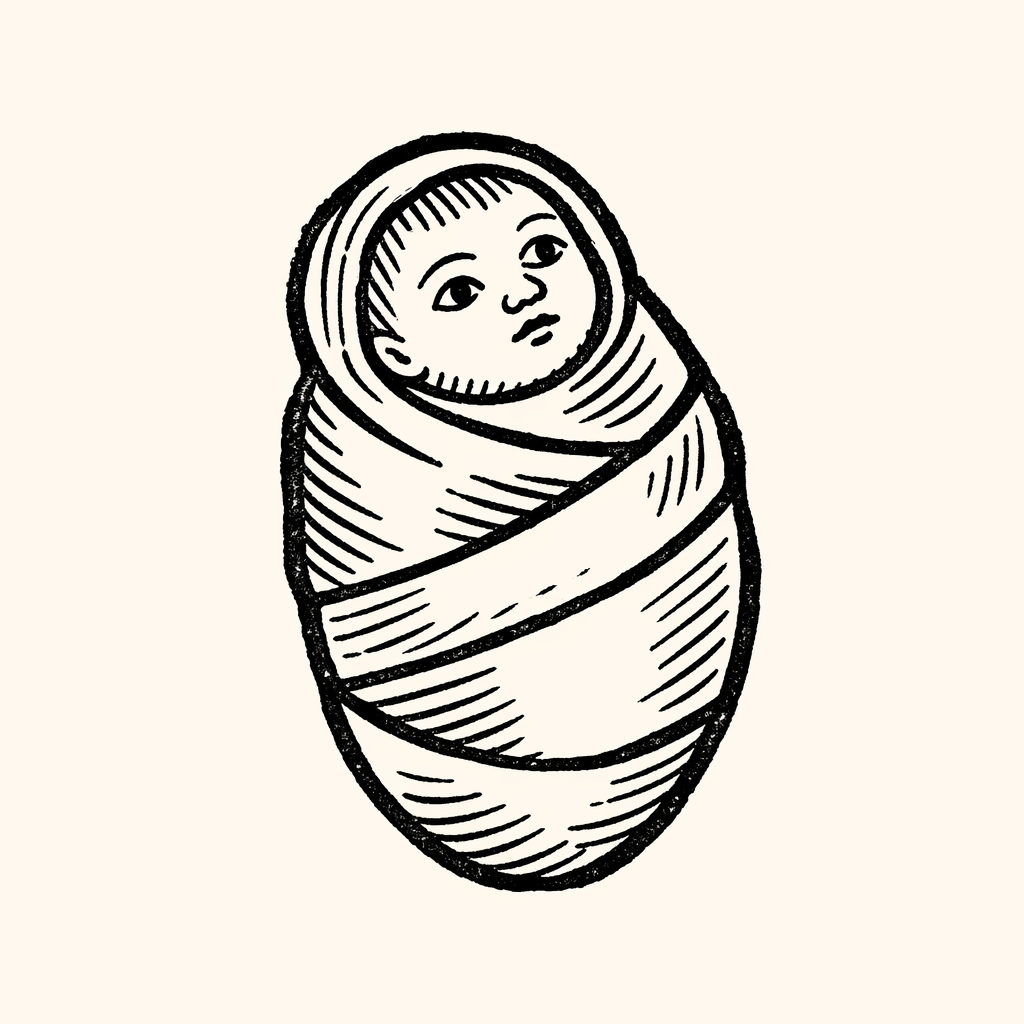
Baby
The new self, the divine child, beginning, vulnerability.
The baby in a dream is the most direct image the psyche has for new life: a new self, a new project, an emergent capacity that has only just arrived. Jung’s divine child archetype names the same territory. Across nearly every religious tradition with a nativity story (the infant Christ, the infant Krishna, the infant Buddha) the same archetypal pattern recurs.
The Jungian reading
Jung treats the divine child in The Archetypes and the Collective Unconscious (CW 9i) as one of the central archetypes of the new self emerging during individuation. The dream-baby is rarely about a literal baby; it is the dream’s image of something new in the dreamer’s life that is small, vulnerable, demanding, and full of future. The dreamer’s relationship to the baby in the dream — joyful, frightened, neglectful, protective — tracks their relationship to the new beginning.
Christian and Hindu readings
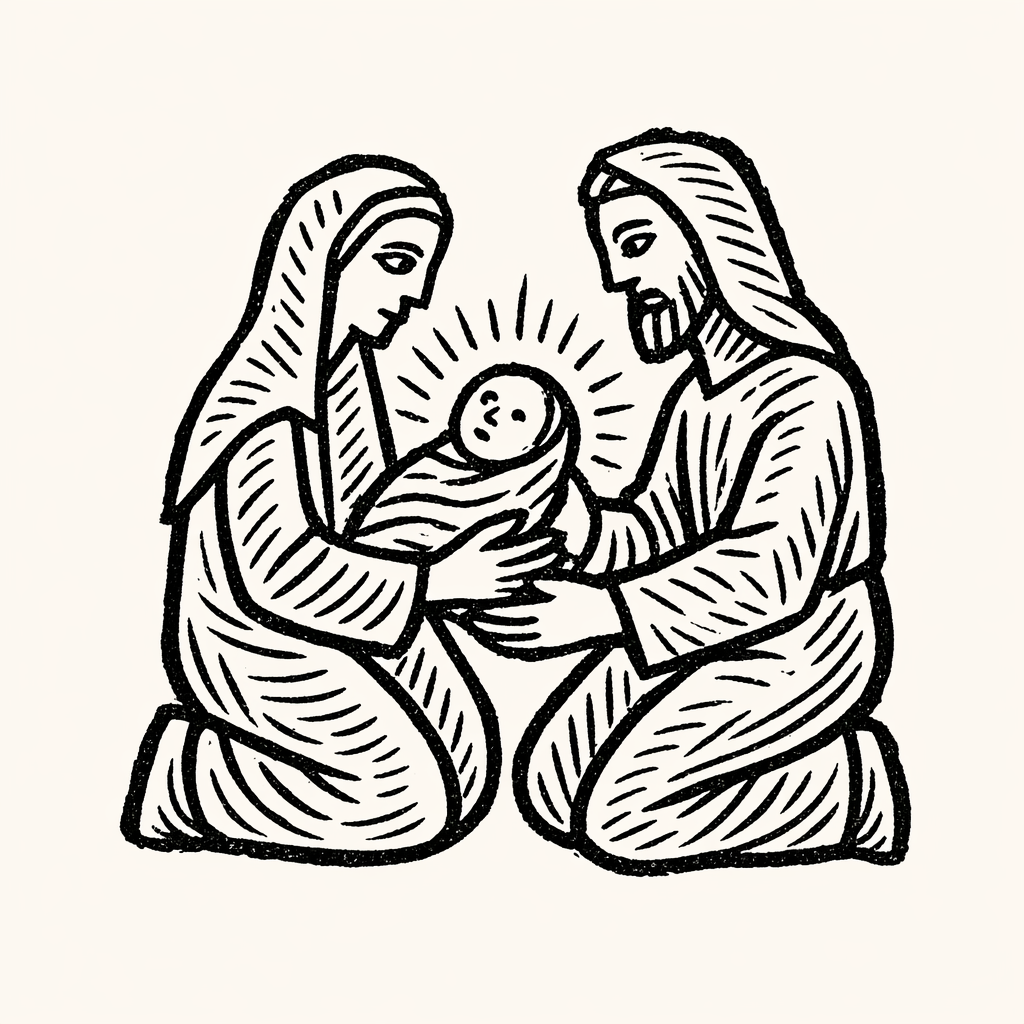
The Christian nativity and the Hindu narratives of the infant Krishna both place a divine child in particular conditions of vulnerability: born in a stable, hidden from political danger, threatened by adult power. Both traditions read the new life as something that must be protected at the start.
When this dream recurs
Recurrent baby-dreams cluster in the early months of major life-projects: new vocations, new relationships, recovery, the writing of a book or the forming of a new identity. They tend to soften once the new beginning has stabilized.
If the dream changes
- From neglected to held. The conscious self has begun to attend.
- From in-danger to safe. Real protection has arrived.
- From a baby to a child to an adult. The new self has matured across dream-cycles — among the most generative dream-progressions.
Related dreams and symbols
Pair with Egg, Divine Child, [Womb], and the dreams of A baby and Pregnancy.
What to ask in your journal
If baby appears in your dream, sit with these prompts before reaching for an interpretation.
- Was the baby yours, or someone else's, or unknown?
- How did you feel about the baby — joy, fear, ambivalence?
- Was the baby healthy, struggling, asleep, awake?
- What in waking life has just been born and needs holding?
- What new self is asking for the kind of attention an infant requires?
Frequently asked
What does it mean to dream of a baby?
The baby is the dream's most direct image of *new life* — a new self, a new project, an emergent capacity. Jung's *divine child* archetype names the same territory.
What does it mean to dream of a baby in danger?
Often the dream's image of a vulnerable new beginning the conscious self has been failing to protect. Worth attending to.
What does it mean to dream of a baby that is not yours?
Sometimes literal (an actual baby in the dreamer's life); often metaphoric. Note whose baby it is — the dream is using the relationship to convey what the new beginning is connected to.
Does dreaming of a baby mean I'll be pregnant?
Rarely. See [/dreams/pregnancy](/dreams/pregnancy) for the broader treatment. Baby-dreams in non-pregnant dreamers are almost always metaphoric — the dream's image of something new being born.
Cited works
Each interpretation on this page traces back to one of these primary sources. Quotation with attribution welcome — see our methodology for how we cite.
- Carl Gustav Jung (1959) *The Archetypes and the Collective Unconscious (Collected Works, Vol. 9, Part 1)*. Princeton University Press. Trans. R. F. C. Hull.
- Carl Gustav Jung (1956) *Symbols of Transformation (Collected Works, Vol. 5)*. Princeton University Press. Trans. R. F. C. Hull.
- Anonymous (attributed to Matthew) (c. 80–90 CE) *New Testament — Gospel of Matthew (chapters 1, 2, 27)*
- Vedic seers (anonymous) (c. 700 BCE) *Brihadaranyaka Upanishad (4.3, on the dream-state)*