A Baby
A new beginning that cannot yet walk on its own.
The baby-dream is among the most cross-culturally consistent and emotionally weighted dreams humans report. Across Jungian psychology, Christian mysticism, Hindu bāla-imagery, and the documented traditions of several Indigenous peoples, the dream-baby almost always indicates a new self in its earliest, most vulnerable form. It is the project just begun, the relationship two months old, the recovery a fortnight in, the version of you that has only barely begun to be possible.
The Jungian reading
Jung named this the archetype of the Divine Child (CW 9, Part 1, “The Psychology of the Child Archetype”). The dream-child is the announcement of the Self in its beginning aspect — the new center of the personality, not yet integrated. Critically, the dream-child often appears in surprising contexts: in men who have never wanted children, in women past menopause, in the recently widowed. The dream is not asking about literal parenting; it is asking about the new life that the conscious ego has not yet noticed.
The treatment of the baby in the dream — fed, lost, dropped, hidden, celebrated — is the dream’s verdict on how the conscious self is currently relating to the new thing. A useful clinical observation, frequent in Jungian case literature: the dream-baby that grows visibly between dreams tracks the integration of the new content. A dream-baby that is always one age, or always the same size, often marks a stalled integration.
The Freudian reading
Freud, in Die Traumdeutung, treats the dream-baby in adults as either regression to one’s own infancy material, displaced sexual or relational content, or the direct expression of childbirth-related wishes or anxieties. The first reading is most useful when the baby in the dream resembles or is identified as the dreamer; the Jungian reading is broader and fits most other cases better.
Hindu bāla and Christian readings
In Hindu devotional literature the infant Krishna is worshipped specifically as a baby (bāla-bhāva) precisely because the infant form makes a relation of tender care possible. To dream of a luminous infant in this tradition is, in some classical commentaries, a direct visit from the Self in its most accessible form. The Christian nativity-dream — the unfamiliar luminous infant arriving uninvited — is one of the most well-documented dream-types in Christian spiritual-direction literature. Both traditions frame the dream-infant as a beginning that asks to be received tenderly.
Why this dream recurs
Recurrence usually tracks an integration in slow progress. Three patterns:
- In early creative or relational beginnings — the dream is the psyche’s way of staying connected to the new thing.
- In recovery — from illness, addiction, depression, divorce — when the new self is genuinely fragile.
- In the years after a real birth — when the dream-baby is sometimes the literal child and sometimes another new beginning the parent is tracking under the cover of the parental role.
If the dream changes
- From a sick baby to a well baby. Integration progressing.
- From a tiny baby to a growing child. The new self maturing.
- From a lost baby to a found baby. Reclamation of something that had been let go of in fatigue.
- From a baby to a child. The new self coming into its own.
When to take it seriously
In people who have lost a pregnancy or a child, baby-dreams are grief-processing dreams and need grief-trained care. They are also among the most common ordinary dreams of growth.
If the dream changes…
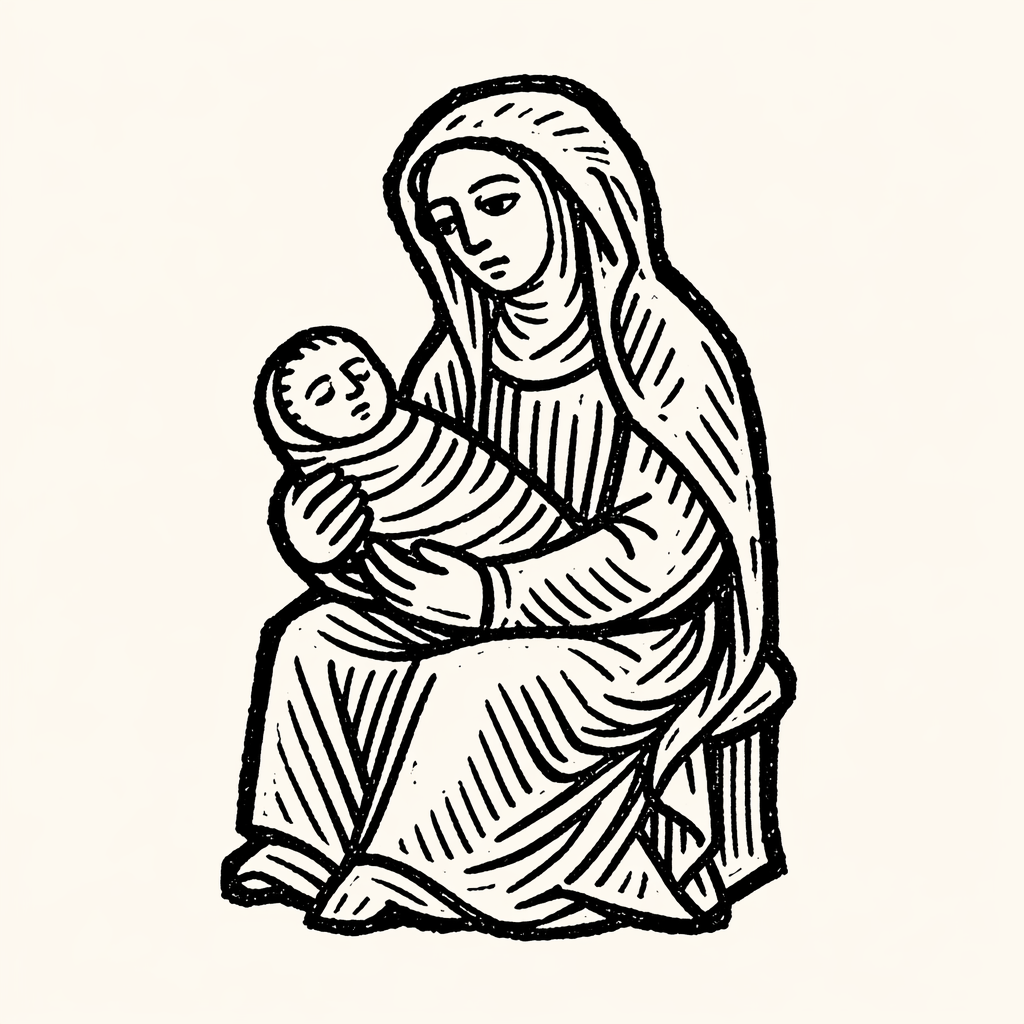
- Holding a baby. Stewardship; something entrusted to you.
- A baby crying. A new beginning announcing it is being neglected.
- Forgetting a baby. Anxiety dream of overload; recurrence matters.
- An ill baby. The new beginning is in trouble. Worth attending to.
- An unfamiliar baby. The Divine Child — a new self not yet claimed.
- A baby growing rapidly. Visible integration; the new thing catching up to itself.
What to ask in your journal
If a baby appears in your dream, sit with these prompts before reaching for an interpretation.
- Was the baby yours, someone else's, or unattributed?
- Was the baby healthy, ill, hidden, abandoned, celebrated?
- What is new in your waking life that may not yet know how to walk on its own?
- Were you the parent in the dream, or a witness? The position changes the reading.
- Did anyone else react to the baby — refuse it, feed it, take it away?
Frequently asked
Does dreaming of a baby mean I'm pregnant?
Almost never directly. Baby-dreams cluster heavily in periods of *creative beginning* — the first months of a new project, relationship, identity, recovery. Some women do report baby-dreams in the first trimester before they consciously know they are pregnant, which is interesting but well within the rate of coincidence.
What does it mean to dream of holding a baby?
Stewardship. Something has been entrusted to you that needs constant tending. The mood of the dream — competence, fear, exhaustion, joy — is the dream's verdict on your relation to that 'something.'
What does it mean to forget a baby in a dream?
One of the most common anxiety-dreams in working parents and creators. The dream is rarely about the literal baby; it is about a part of life you fear is being lost in the press of daily duty.
What does an unfamiliar baby in a dream mean?
The Jungian *Divine Child* archetype: a part of you that is genuinely new, that has not yet been claimed by the conscious self.
Cited works
Each interpretation on this page traces back to one of these primary sources. Quotation with attribution welcome — see our methodology for how we cite.
- Carl Gustav Jung (1959) *The Archetypes and the Collective Unconscious (Collected Works, Vol. 9, Part 1)*. Princeton University Press. Trans. R. F. C. Hull.
- Carl Gustav Jung (1956) *Symbols of Transformation (Collected Works, Vol. 5)*. Princeton University Press. Trans. R. F. C. Hull.
- Sigmund Freud (1899) *The Interpretation of Dreams (Die Traumdeutung)*. Franz Deuticke. Trans. James Strachey (1953). read online
- Anonymous (attributed to Matthew) (c. 80–90 CE) *New Testament — Gospel of Matthew (chapters 1, 2, 27)*
- Vedic seers (anonymous) (c. 700 BCE) *Brihadaranyaka Upanishad (4.3, on the dream-state)*
- Lee Irwin (1994) *The Dream Seekers: Native American Visionary Traditions of the Great Plains*. University of Oklahoma Press.