A Dead Loved One
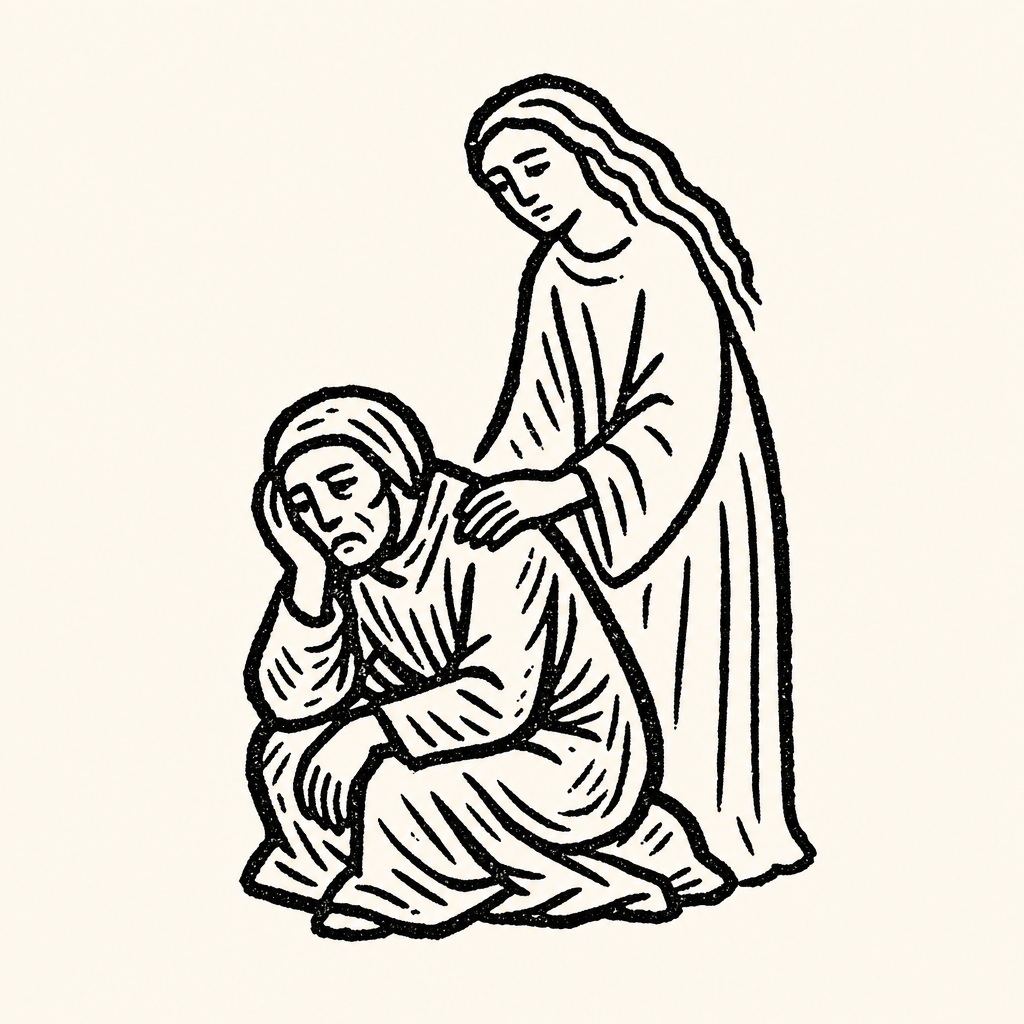
Someone you have lost arrives in the dream — alive, themselves, often saying something.
Few dreams carry more weight than dreams of the dead. They are documented in the oldest dream-records on the planet — the Sumerian iškar zaqīqu tablets, the Egyptian Book of the Dead, the Yi Jing — and they remain, in modern dream-content research, one of the most emotionally significant dream-types humans have. We approach this dream gently and with care.
A clarification we want to make up front: clinical bereavement research, across multiple decades and many cultures, finds that a substantial subset of bereaved people experience dreams of the deceased that feel categorically different — clearer, more present, more healing. The research community (William Worden’s grief work, Joyce Lichtenstein’s visitation studies, the Center for Complicated Grief at Columbia) takes these dreams seriously whatever one believes about their metaphysics, because they measurably reduce grief intensity and integrate the lost relationship. We do not pronounce on metaphysics on this site. We do honor the experience.
The Jungian reading
Jung — who lost his father early and his daughter Helene late — wrote about his own dead-loved-one dreams in Memories, Dreams, Reflections (1962, ch. 9, “On Life After Death”). His clinical position: these dreams are part of the integration of what the loved one carried for the dreamer. Each significant relationship contains projections — qualities the dreamer placed in the other person — and after death those projections must come home. The dreams are part of that homecoming. He treats the peaceful dream-image of the loved one as a sign that the homecoming is going well, and the unwell image as a sign that work remains.
Marie-Louise von Franz on dreams of the dying and the dead
Von Franz’s On Dreams and Death (1986) is the single most-cited Jungian-tradition study of these dreams. She documents striking patterns in dreams of the dying — recurring symbols (a journey, a ferryman, a wedding, a flowering tree) — and argues that the same symbols recur in the bereaved who dream of the dead. The dreams are doing the same work on both sides of the threshold.
Vedic, Sufi, Christian readings
The Atharvaveda contains explicit ritual responses to dreams of dead relatives — often śrāddha offerings to settle the relationship. Sufi tradition treats the clear, peaceful dream of a loved one as a ru’ya ṣāliḥa — a true dream — and Ibn Sirin’s Ta’bir al-Ru’ya devotes sustained attention to them. The Christian tradition, from Genesis (Joseph’s dreams, Jacob’s ladder) through the patristic dream-literature, treats some dreams of the dead as graced encounters; the test offered across all three traditions is the same — does the dream feel true? Does it feel of them? — and the answer is left to the dreamer.
Indigenous traditions
We are careful not to flatten. Lee Irwin’s The Dream Seekers documents dreams-of-the-dead practices across several Plains traditions, often involving specific protocols — naming, offerings, the preservation of the dream-words — for honoring such visits. Tedlock’s edited volume Dreaming documents similar practices in Mesoamerican, Tibetan, and Aboriginal contexts. The pattern is striking: cultures without depth psychology have often built elaborate ritual containers for these dreams.
Why this dream recurs
Three patterns are well-documented:
- Acute grief. In the first months after a significant loss, dreams of the deceased are common, often nightly, and often distressing.
- Anniversary reactions. Dreams cluster around anniversaries — death day, birthday, the holidays the loved one anchored — for years afterward.
- Unfinished material. Recurrent dreams sometimes track unfinished conversations: things not said, forgiveness not given or received, roles not laid down.
The recurrence usually softens once the underlying material is engaged — through writing letters not sent, through grief-trained therapy, through ritual, through the slow work of admission.
If the dream changes
- From the loved one ill to the loved one well. A widely-reported marker of grief integrating.
- From the loved one distant to the loved one close. Often a sign of the relationship being internalized.
- From the loved one silent to the loved one speaking. A specific gift; many bereaved people remember the exact words for the rest of their lives.
- From frequent dreams to occasional dreams. Almost always part of the natural progression.
When to take it seriously
Persistent painful dreams of a recent loss, particularly with complicated grief symptoms (intrusive imagery, inability to function, prolonged severe sadness lasting many months) are worth working through with a grief-trained therapist. The Center for Complicated Grief (Columbia University) maintains directories of trained clinicians.
We treat this entry with care because grief is sacred. If the dream moved you, it is doing what it is supposed to do.
If the dream changes…
- The dead loved one peaceful and whole. Often a marker of integration; the loved one's image released from the form of their dying.
- The dead loved one says something specific. Note the exact wording. Many bereaved dreamers have reported lines they remember decades later.
- The dead loved one as they were when ill. More common in early grief. The dream is still working with the difficult last form.
- The dead loved one ignoring you or distant. Almost never about them. Usually about something the dreamer hasn't yet allowed themselves to grieve openly.
- The dead loved one giving you something. Across nearly every tradition, a benevolent dream. Note the gift.
- The dead loved one transformed (younger, ageless, light). The 'visitation' form bereavement research describes most often.
What to ask in your journal
If a dead loved one appears in your dream, sit with these prompts before reaching for an interpretation.
- Was the loved one well, ill, transformed, ageless?
- Did they speak? What did they say? The exact wording matters.
- How did the dream feel — peaceful, frightening, ordinary, sacred?
- What was unfinished between you, and is the dream gently completing it?
- Did anything happen at the end of the dream — a parting, a gift, a gesture you were left with?






Frequently asked
What does it mean to dream of someone who has died?
Across nearly every depth-psychological and spiritual tradition, dreams of the dead are read gently and seriously. The most common readings: an ongoing piece of grief-work; an integration of what the loved one carried for you; or — a category clinical bereavement research takes seriously — a 'visitation' dream that simply has the quality of presence.
Are dreams of dead people real visitations?
We do not pronounce on metaphysics. What is documented: a substantial subset of bereaved people report dreams of the deceased that *feel categorically different* from ordinary dreams — clearer, more present, more healing. Clinical bereavement research (the work of William Worden, Joyce Lichtenstein, and others) finds these dreams measurably reduce grief intensity in those who have them and considers them important regardless of metaphysical interpretation.
Why do I keep dreaming of someone I've lost?
Recurrence usually tracks unfinished material — something you didn't say, didn't ask, didn't reconcile. Recurrent dreams of the lost loved one often soften when that material is named, written, spoken aloud, or grieved more openly.
What does it mean if a dead loved one is well in the dream?
Almost always one of the most reassuring forms of the dream. The image of the loved one *whole, ageless, peaceful* is read by nearly every tradition as the dreamer's own integration of who they were.
What does it mean if a dead loved one is angry in the dream?
Carefully. The anger is almost never theirs; it is usually the dreamer's own unspoken anger, projected onto the loved one. Sit with what you weren't allowed to say.
Is dreaming of a dead person a bad omen?
Across the major traditions we work with, no. These dreams are read as the work of integration, not as forecasts. Several traditions (Sufi, some Christian, some Indigenous) treat clear visitation dreams as actively benevolent.
Cited works
Each interpretation on this page traces back to one of these primary sources. Quotation with attribution welcome — see our methodology for how we cite.
- Carl Gustav Jung (1959) *The Archetypes and the Collective Unconscious (Collected Works, Vol. 9, Part 1)*. Princeton University Press. Trans. R. F. C. Hull.
- Carl Gustav Jung (1962) *Memories, Dreams, Reflections*. Pantheon Books.
- Marie-Louise von Franz (1986) *On Dreams and Death*. Shambhala.
- Anonymous (c. 6th–5th century BCE) *Hebrew Bible — Book of Genesis (chapters 28, 37, 40, 41)*Jacob's ladder, Joseph's dreams, Pharaoh's dreams.
- Lee Irwin (1994) *The Dream Seekers: Native American Visionary Traditions of the Great Plains*. University of Oklahoma Press.
- — (c. 7th century CE) *Qur'an — Surah Yusuf (12)*