A Flood
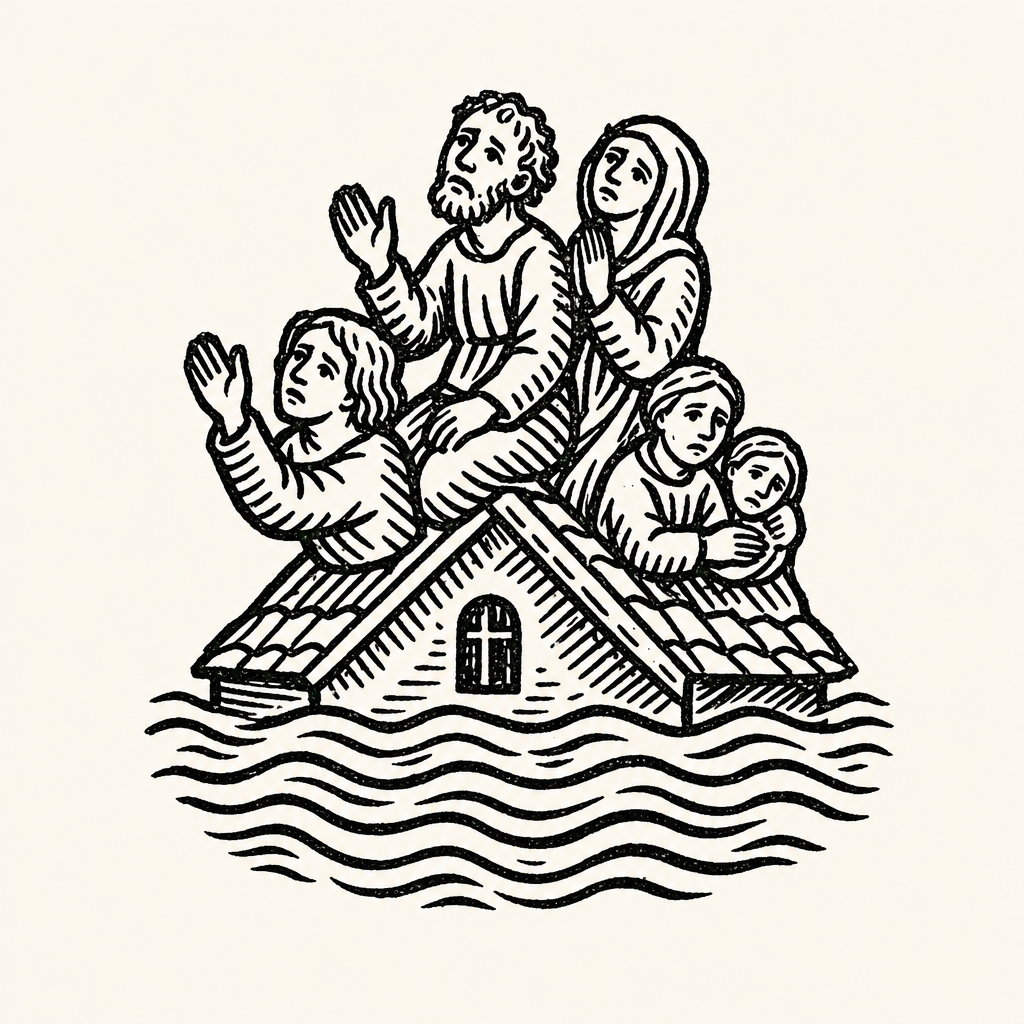
Water rising into a familiar room. Feeling overwhelming a structure.
The flood-dream is one of the most overtly mythological dreams humans report. The deluge is one of the most widely-distributed mythic patterns on the planet — Sumerian (the Atrahasis epic), Hebrew (Noah), Vedic (Manu), Greek (Deucalion), Mesoamerican, Pacific Northwest, Algonquin — and Bulkeley’s Big Dreams (2016) documents that flood-dreams in modern dreamers carry striking mythic-scale resonance, often without the dreamer having conscious access to the source myths.
The Jungian reading
Jung treated flood-dreams as one of the most direct images of the unconscious overflowing the conscious structures that ordinarily contain it. The room or building being flooded is part of the message — a kitchen flood is one symbol; an office flood another; a childhood-bedroom flood another still. The water is the same; the container changes the content.
Vedic and Christian readings
The Vedic manvantara tradition reads the deluge as cyclic — the world cleansed and remade — and dream-floods in this register carry a similar weight: an overwhelm that is also a renewal. Genesis 6–9 makes the same gesture. Patristic dream-interpreters (Synesius, Tertullian) read deluge-dreams as moments of necessary clearing rather than punishment.
Indigenous traditions
Tedlock’s edited volume Dreaming documents flood-dream traditions across multiple Indigenous cultures, treating them generally as moments of cosmological scale — the dreamer being shown something larger than their personal life. We mention this carefully and only as the traditions hold it.
Why this dream recurs
Recurrent flood-dreams cluster around overwhelm — grief, the end of long relationships, illness, family-of-origin work, and major identity transitions. The recurrence usually softens once the underlying feeling has been allowed expression.
If the dream changes
- From rising water to receding water. The renewal-sign.
- From standing still to climbing. Conscious adaptation.
- From a single flood to many. The dreamer is rehearsing a release in multiple registers.
When to take it seriously
Recurrent flood-dreams alongside acute waking-life crisis or grief deserve therapeutic attention.
If the dream changes…
- A flood in your house. Emotion overwhelming a structure of ordinary life. Note which room.
- A flood you can't escape. Often the dream's image of an overwhelm the conscious self has been refusing to leave.
- A flood receding. The renewal-sign across multiple traditions.
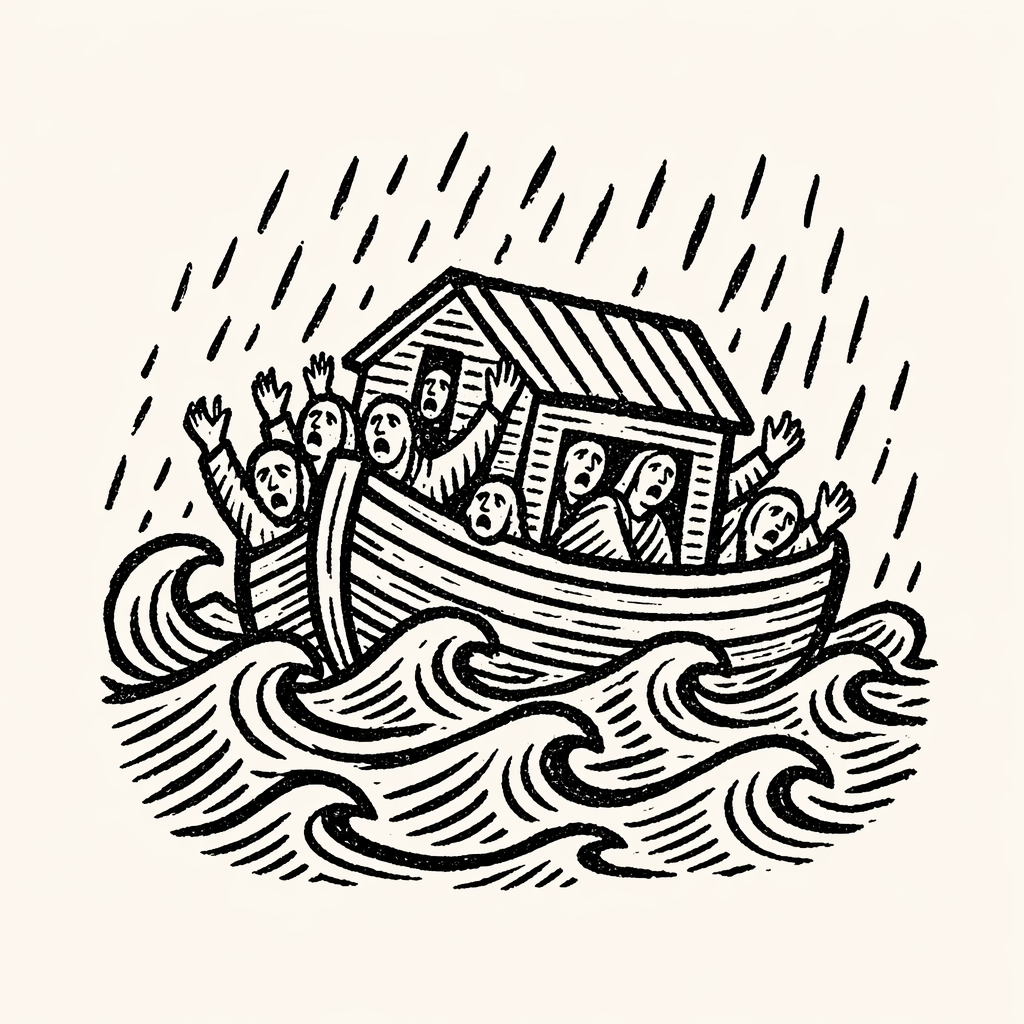
- Surviving on an ark or roof. A reassurance image; the conscious self has found a container.
- A flood that passes through you. Striking when it occurs — feeling moving without destroying.
What to ask in your journal
If a flood appears in your dream, sit with these prompts before reaching for an interpretation.
- What was the building or place being flooded?
- How fast was the water rising? Did it stop?
- Did you fight the flood, evacuate, or stand still?
- What in your waking life feels like it is being overcome by something it cannot quite contain?
- After the flood — was there a sense of after? An ark, a survivor, a clean room?

Frequently asked
What does it mean to dream of a flood?
Across nearly every dream-tradition, flood-dreams are read as feeling overwhelming a structure of ordinary life. The room or place being flooded is part of the message: a kitchen flood is one symbol, a workplace flood another, a childhood-bedroom flood another still.
Is dreaming of a flood a warning?
Almost never literal. Flood-dreams cluster in periods of emotional overwhelm — the loss of a parent, a major relationship change, a long-suppressed feeling beginning to break through. They are uncomfortable but generative.
Why does the flood-dream feel mythological?
Because it is. The deluge myth is one of the most widely-distributed mythic patterns on the planet (Sumerian, Hebrew, Vedic, Greek, Mesoamerican, Pacific Northwest, many more). Bulkeley's *Big Dreams* documents how flood-dreams in modern dreamers carry mythic-scale resonance, often without the dreamer knowing the source myths.
What does it mean if the flood recedes?
Often a marker of overwhelm having been borne. The waters going down is, across multiple traditions, the renewal-sign — the *Genesis 8* pattern.
What does it mean to be on an ark or boat in the flood?
A reassurance image, often the dream's most generous form: the conscious self has found a vessel that can carry it through the overwhelm without the overwhelm being denied.
Cited works
Each interpretation on this page traces back to one of these primary sources. Quotation with attribution welcome — see our methodology for how we cite.
- Carl Gustav Jung (1959) *The Archetypes and the Collective Unconscious (Collected Works, Vol. 9, Part 1)*. Princeton University Press. Trans. R. F. C. Hull.
- Anonymous (c. 6th–5th century BCE) *Hebrew Bible — Book of Genesis (chapters 28, 37, 40, 41)*Jacob's ladder, Joseph's dreams, Pharaoh's dreams.
- Vedic seers (anonymous) (c. 1200–1000 BCE) *Atharvaveda*Books 6, 7, and 16 contain dream classifications and apotropaic formulas; the swapna-sukta tradition develops here.
- Barbara Tedlock (ed.) (1987) *Dreaming: Anthropological and Psychological Interpretations*. Cambridge University Press.
- Kelly Bulkeley (2016) *Big Dreams: The Science of Dreaming and the Origins of Religion*. Oxford University Press.