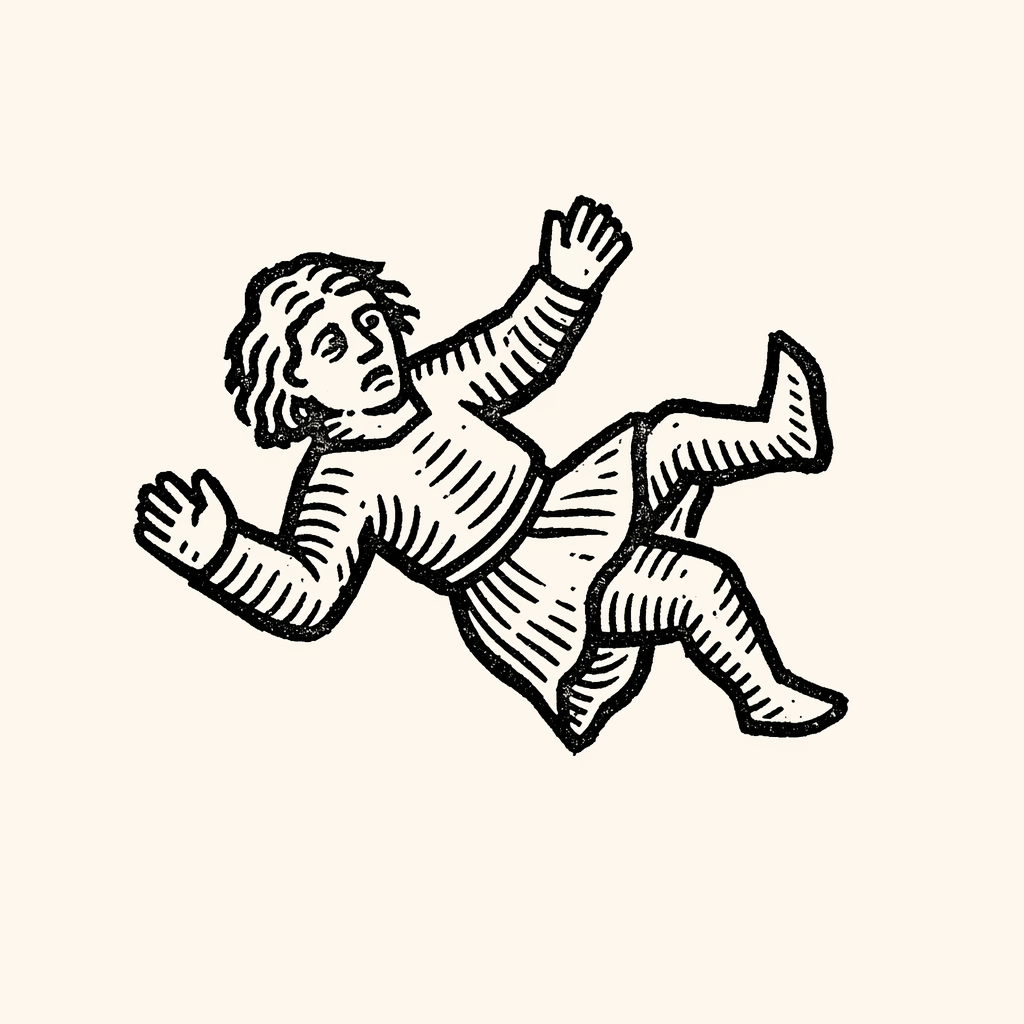
Falling
Loss of footing — the dreamer descending uncontrollably.
Falling-dreams are among the most universally reported common dreams. The dream-image is consistent across cultures: the conscious self losing its footing and descending uncontrollably. Across Freud and Jung the symbol is read as loss of footing — a part of waking life where the dreamer is no longer firmly grounded.
See also the dream-entry Falling for the long-form treatment.
The Freudian reading
Freud’s treatment of falling-dreams in Die Traumdeutung places them among the control-loss anxiety family. Useful particularly when the dream arrives in periods when the conscious self has been pretending to have a grip it does not in fact have.
The Jungian reading
Jung’s reading is broader. The fall is not necessarily catastrophe; it is sometimes the necessary descent. The dream-mind reaches for falling when the conscious self has been refusing to come down from a position that has become untenable. The fall is then more invitation than warning.
The cognitive-emotional reading
Hartmann’s pattern-matching framework reads falling as the dream-mind’s most efficient image of loss of agency. The image is universal because the felt experience is universal.
If the dream changes
- From frightened to peaceful. The conscious self has consented.
- From falling-and-waking to falling-and-landing. Integration of the symbol — the dreamer has practiced surrender.
- From a cliff to a tower to ordinary heights. The dream’s scale-reduction often tracks real decreases in waking-life pressure.
Related dreams and symbols
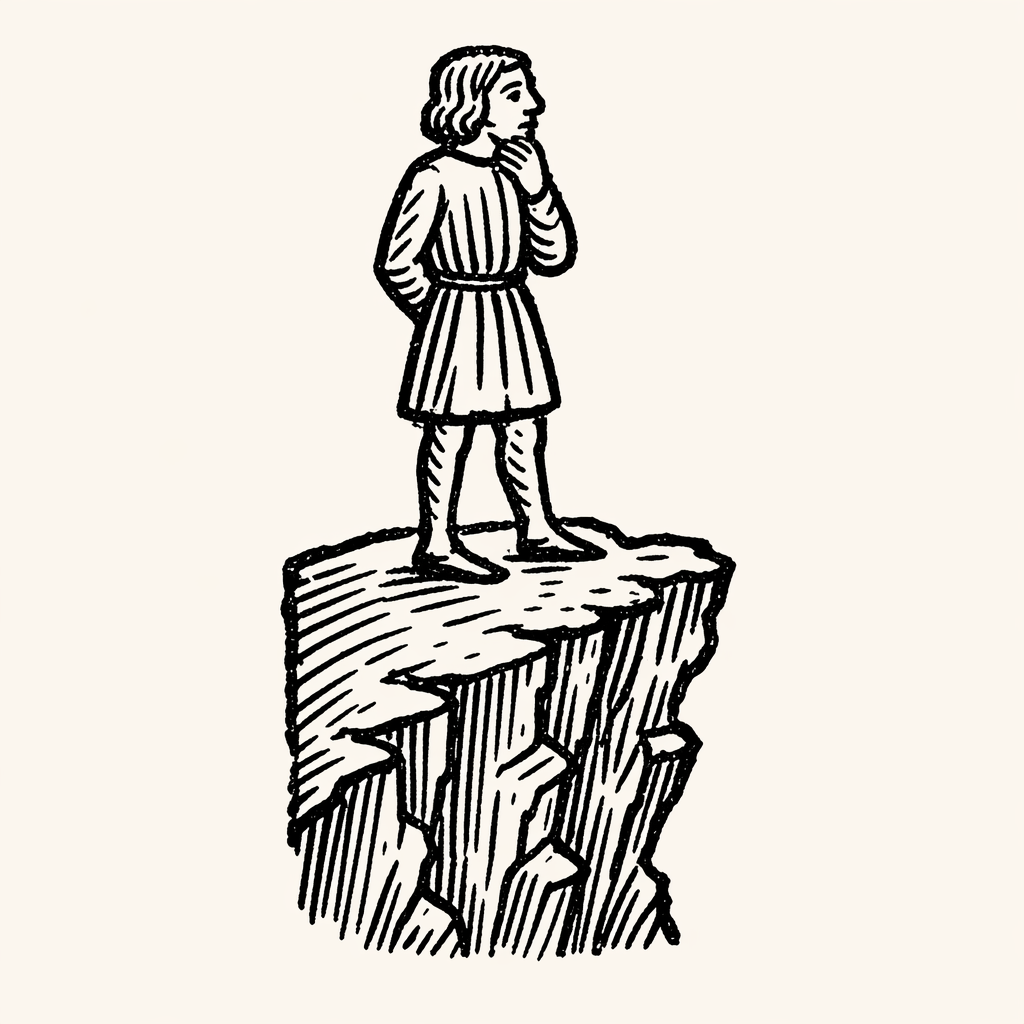
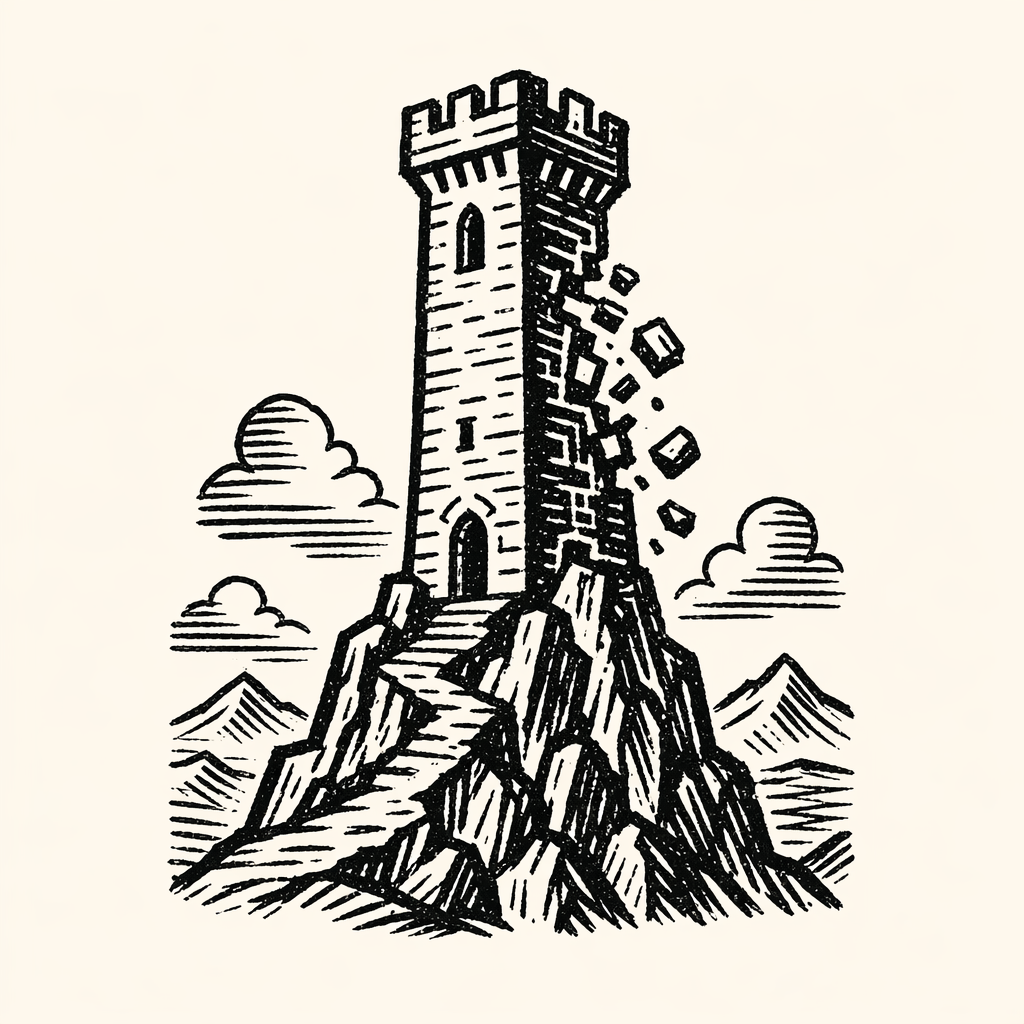
Pair with Cliff, [Sky], Tower, and the dreams of Falling and An out-of-control car.
What to ask in your journal
If falling appears in your dream, sit with these prompts before reaching for an interpretation.
- What were you falling from — a cliff, a building, a sky, your own bed?
- How did the fall feel — frightening, peaceful, slow, fast?
- Did you land?
- Where in waking life is your footing uncertain?
- What might it mean to consent to the fall rather than fight it?
Frequently asked
What does it mean to dream of falling?
Falling-dreams are among the most universally reported common dreams. Across the depth-psychological tradition the symbol is read as *loss of footing* — a part of waking life where the conscious self is no longer firmly grounded.
Why do I wake up before I hit the ground?
Common, and not the same as the folk-superstition that 'if you hit the ground you die.' Modern dream-content research finds most dreamers wake at moments of greatest dream-arousal; the fall is the arousal.
What does it mean to fall and land safely?
Often a positive marker — the loss of control did not actually destroy anything. The conscious self has practiced surrender.
Are falling dreams related to the hypnic jerk?
The hypnic jerk (the body's twitch at sleep onset) is sometimes integrated into a falling-dream by the dream-mind. The two are related but not the same.
Cited works
Each interpretation on this page traces back to one of these primary sources. Quotation with attribution welcome — see our methodology for how we cite.
- Sigmund Freud (1899) *The Interpretation of Dreams (Die Traumdeutung)*. Franz Deuticke. Trans. James Strachey (1953). read online
- Carl Gustav Jung (1956) *Symbols of Transformation (Collected Works, Vol. 5)*. Princeton University Press. Trans. R. F. C. Hull.
- Carl Gustav Jung (1959) *The Archetypes and the Collective Unconscious (Collected Works, Vol. 9, Part 1)*. Princeton University Press. Trans. R. F. C. Hull.
- Ernest Hartmann (2011) *The Nature and Functions of Dreaming*. Oxford University Press.