Naked in Public
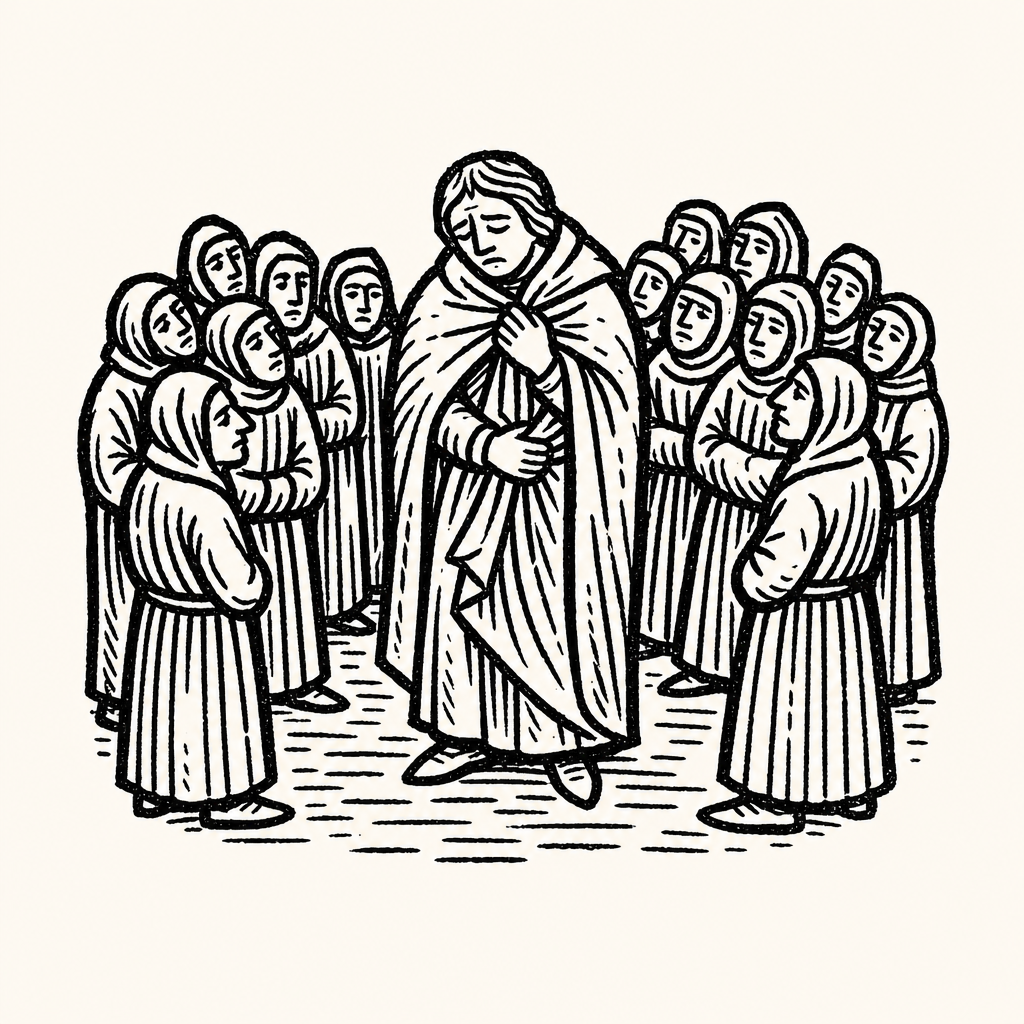
You realize, far too late, that you are not wearing what you should be.
The naked-in-public dream is one of the most consistently reported exposure dreams in human history. Artemidorus describes it in Oneirocritica (2nd c. CE). Augustine writes about it. Freud devotes pages to it in Die Traumdeutung (1899). Hall–Van de Castle find it in the top fifteen most common dream contents in modern adults. Its universality is striking; so is its persistent emotional weight.
The Freudian reading
Freud, characteristically, read the naked-in-public dream as displaced sexual content — the adult repurposing of childhood exhibitionism, the disguise of a wish to be seen. He notes (ch. 5–6) that the most diagnostic detail is the crowd’s reaction: in most reported dreams, the crowd is indifferent, which Freud reads as the wish-fulfillment giving itself away (the dreamer wishes to be seen, but unjudged). The reading is narrower than Jung’s but worth knowing.
The Jungian reading
Jung’s reading places the dream in the architecture of the persona — the social face the conscious self constructs. Nakedness in a dream is the persona slipping. The dream is asking, often, whether the persona has become too tight, too unlike the real self, too laborious to maintain. Jung reads the relief-form of the dream — naked and free, naked and unbothered — as a quiet announcement that the persona is being recalibrated.
Greek antiquity
Artemidorus’s reading is striking: he treats certain naked-in-public dreams as favorable omens of public truth-telling — the philosopher’s naked candor, the prophet’s defenseless honesty. He warns only against nakedness in unfit company, which he reads as the dream’s caution against indiscretion.
Why this dream recurs
Recurrent exposure dreams almost always track an unspoken anxiety about visibility in some specific waking-life domain. The setting of the dream is usually the diagnostic. They cluster, in modern dream-content research, in periods of:
- New visibility — promotions, public-speaking commitments, social media expansion.
- New vulnerability — recovery from illness, post-divorce, coming out, starting therapy.
- Old shame being touched — anniversary reactions, family events, encounters with old peer groups.
If the dream changes
- From shame to indifference. The exposure is being tolerated.
- From naked to half-dressed to dressed. Reintegration.
- From frantic cover-up to calm acknowledgment. The persona is recalibrating cleanly.
When to take it seriously
Persistent exposure dreams accompanied by waking-life social anxiety, body-image distress, or trauma history (particularly sexual-abuse history) are worth working through with a therapist trained in the relevant modality (CBT for social anxiety; EMDR or IFS for trauma).
If the dream changes…
- Naked at school. Adolescence-style judgment anxiety borrowed by an adult feeling tested.
- Naked at work. Professional exposure — competence, fitness, belonging — feared visible.
- Naked among family. Family-of-origin dynamics; old roles being reset.
- Naked and no one notices. The most reassuring form. Exposure tolerated without consequence.
- Naked and ridiculed. The dream giving voice to the dreamer's expected reception. Worth questioning.
- Half-dressed. Partial exposure — the dream sometimes says *not all of it has come into view yet*.
- Naked and free. Relief-form. The persona laid down.
What to ask in your journal
If naked in public appears in your dream, sit with these prompts before reaching for an interpretation.
- Where were you when you realized? Among strangers, family, coworkers, an unspecified crowd?
- What was the reaction? Indifference, mockery, kindness, none at all?
- What part of you, in waking life, do you fear is becoming visible against your will?
- Are you actually preparing for a moment of exposure — a presentation, a confession, a coming-out?
- Was the nakedness uncomfortable, freeing, both?


Frequently asked
What does it mean to dream of being naked in public?
The dream is almost always about exposure — a part of yourself you fear is becoming visible without your control. Across nearly every tradition, the reading turns on the *crowd's reaction*: indifference is one register, mockery is another, kindness is another still. Each is the dream's verdict on how the dreamer expects to be received.
Why do people dream of being naked at school or work?
Setting matters. School-naked dreams typically track adolescence-style judgment-anxiety; work-naked dreams track professional exposure; family-naked dreams track family-of-origin dynamics. Same form, different content.
Is being naked in a dream sexual?
Sometimes — Freud read it that way — but more often it's about exposure than desire. The dream's emotional tone is the diagnostic: shame and panic point one way, freedom and ease another, indifference yet another.
What does it mean if no one notices my nakedness?
One of the most reassuring forms of the dream. The exposure has been tolerated, by both the dream-self and the dream-others, without consequence. Often a marker of integration.
What does it mean to feel free while naked in a dream?
A genuine relief-form. The persona has been laid down briefly; the dreamer has experienced themselves as a creature without armor. Often arrives during real periods of integration or recovery.
Cited works
Each interpretation on this page traces back to one of these primary sources. Quotation with attribution welcome — see our methodology for how we cite.
- Carl Gustav Jung (1959) *The Archetypes and the Collective Unconscious (Collected Works, Vol. 9, Part 1)*. Princeton University Press. Trans. R. F. C. Hull.
- Sigmund Freud (1899) *The Interpretation of Dreams (Die Traumdeutung)*. Franz Deuticke. Trans. James Strachey (1953). read online
- Artemidorus of Daldis (c. 2nd century CE) *Oneirocritica (The Interpretation of Dreams)*. Oxford University Press. Trans. Daniel E. Harris-McCoy (2012).
- Kelly Bulkeley (2016) *Big Dreams: The Science of Dreaming and the Origins of Religion*. Oxford University Press.