Lucid Dreaming: A Beginner's Guide That Actually Works
How to learn lucid dreaming — what it is, what the science says, the proven induction techniques (MILD, WBTB, SSILD), and what to do once you become aware inside a dream. With cited sources and honest expectations.
A lucid dream is a dream in which you know you are dreaming. That single recognition — usually a flash of “wait, this is a dream” — opens up a strange and useful inner space. You can investigate the dream without it dissolving. You can talk with characters who turn out to know things you don’t consciously know. You can, with practice, change what happens.
This is a serious, evidence-based primer. There are a lot of bad guides on the internet. The two things that distinguish this one are honest expectations and citations to where the techniques actually came from.
1. What is lucid dreaming, really
Most dreams are not lucid. You’re inside the story. The story has rules. You accept the rules even when they are absurd — gravity reverses, your dead grandfather is at the table, you’re back in middle school but also you have your current job — because critical reasoning is, broadly, offline during REM sleep.
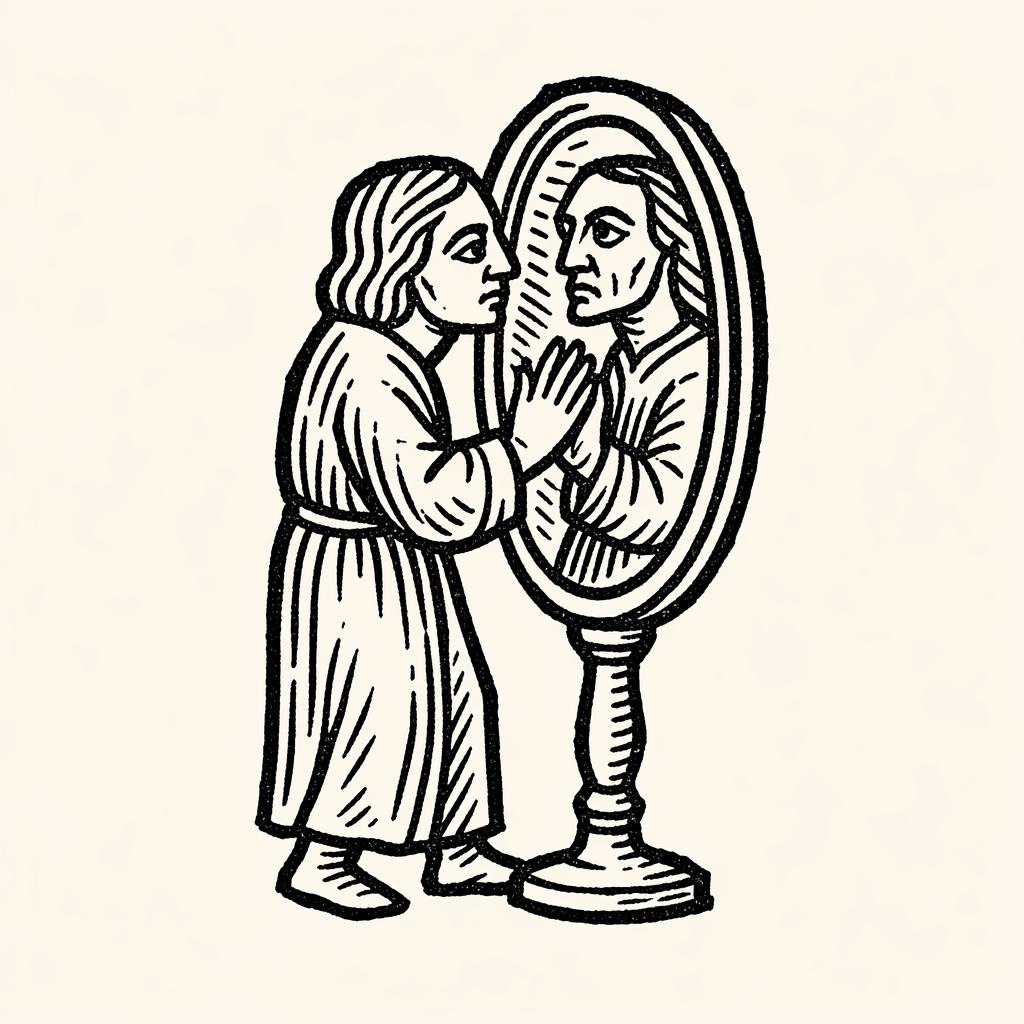
A lucid dream begins the moment that critical reasoning comes back online inside the dream. You notice an inconsistency. You realize you cannot read text reliably. You glance at your hands and they have six fingers. The realization arrives: I am dreaming.
What happens next depends on the dreamer’s training and temperament. Beginners often wake from sheer excitement (this is normal and lasts a few weeks). With practice, the lucid state stabilizes. You can move around. You can ask the dream questions. You can — sometimes — fly.
The neuroscience is real but not magical. Voss et al. (2009, Sleep) and several follow-up studies show that lucid dreaming is a hybrid state of REM sleep with re-activated dorsolateral prefrontal cortex — the part of the brain associated with self-awareness and metacognition, normally quieted during ordinary REM. You are dreaming and self-aware at once.
2. The non-negotiable foundation: a dream journal
Before any technique, the practice. Keep a dream journal.
Every morning, before you do anything else, write down everything you remember from the night, even fragments. Even “I remember nothing, but I was anxious.” Even “color: blue.”
Two weeks of this, and you will start to remember more. Four weeks, and most people are remembering one to three dreams per night. This is not optional. The reason: lucidity is a recognition skill, and you cannot recognize patterns in dreams you cannot remember.
We have a separate guide: How to start a dream journal. If you read no further than this section, do that, and come back in three weeks.
3. Reality checks (the daytime training)
The single most important daytime practice is a reality check: a small action you do during the waking day that asks, in earnest, “am I dreaming right now?”
The point is not to be clever about it. The point is to build a habit so deeply ingrained that you do it inside a dream, where the answer will be different.
Three reliable reality checks:
Hand check. Look at the back of your hand. Count your fingers, slowly, twice. In waking life, they are five and stable. In a dream, they typically warp, blur, multiply, or change between counts.
Text check. Find some text — a sign, a phone screen, a book. Look away. Look back. In waking life, text is stable. In a dream, text is famously unstable; it changes, scrambles, or melts.
Nose-pinch. Pinch your nose closed. Try to breathe through it. In waking life, you can’t. In a dream, you can — air still flows.
Pick one. Do it ten to twenty times a day. Do it when something unusual happens — a near-miss in traffic, a strange comment, a déjà vu. The habit will eventually fire inside a dream, and the dream’s answer will surprise you awake.
4. The proven induction techniques
There are five techniques with reasonable evidence. Pick one and stick with it for three weeks before evaluating.
MILD — Mnemonic Induction of Lucid Dreams
Developed by Stephen LaBerge in the 1980s. The single most-tested protocol.
When you wake from a dream in the night, before falling back asleep:
- Recall the dream you just had in vivid detail.
- Identify a “dreamsign” — something in the dream that should have tipped you off it was a dream.
- Repeat to yourself: “Next time I’m dreaming, I will remember I’m dreaming.” Mean it.
- Imagine yourself back in the dream, this time noticing the dreamsign and becoming lucid.
- Fall back asleep.
LaBerge’s published data (see Exploring the World of Lucid Dreaming, 1990) shows MILD substantially raises lucidity rates over baseline.
WBTB — Wake-Back-To-Bed
The single most powerful potentiator. Set an alarm for about 5–6 hours into your sleep, on a night you can afford to be a little tired the next day. Get out of bed. Stay up for 20–40 minutes — read about dreams, write in your journal, do not check your phone. Then go back to bed and use MILD as you fall asleep.
The reason this works: REM density is concentrated in the second half of the night. WBTB inserts conscious intention right at the doorway to a long REM cycle.
Combined MILD + WBTB is the most effective everyday protocol most beginners can use.
SSILD — Senses-Initiated Lucid Dream
Originated on the LD4all forums and now widely cited. As you fall asleep:
- Close your eyes. For 30 seconds, focus on what you can see (the visual field behind your eyelids).
- For 30 seconds, focus on what you can hear.
- For 30 seconds, focus on bodily sensations.
- Repeat the cycle, faster each time, for 4–6 cycles.
- Fall asleep normally.
Many people who don’t get on with MILD’s verbal repetition find SSILD’s sensory rotation more reliable.
WILD — Wake-Initiated Lucid Dream
Walking from waking directly into a lucid dream without losing consciousness. Powerful but advanced; often produces sleep paralysis as a transition (which is normal but unpleasant). Don’t start here.
DILD — Dream-Initiated Lucid Dream
Becoming lucid from inside a dream that started normally. This is the output of the MILD/reality-check practice, not a technique itself.
5. Stabilizing the lucid state
The single most common beginner experience: you become lucid, get excited, and the dream collapses and you wake up.
Stabilization techniques (use them the moment you become lucid, before doing anything else):
- Rub your hands together. Look at them. The tactile and visual feedback grounds the dream-body in the dream.
- Spin slowly. This breaks the wake-up reflex. Do this for a few seconds before trying to do anything else.
- Touch the environment. Ground, wall, the back of a chair.
- Verbally affirm. “Stabilize. Clarity now.” (LaBerge’s original phrase.)
Don’t try to fly to Mars in the first ten lucid dreams. Walk around. Notice the texture of the floor. The dream will firm up.
6. What to actually do once you’re lucid
This is the part most guides skip, and it is the most interesting.
A lucid dream is not virtual reality for fun (though it can be that). The deeper use is dialogue with the unconscious.
Ask a dream-character a question and listen to the answer. Particularly: a recurring figure, a stranger you don’t recognize, a child. Ask: “Who are you? What do you have to tell me? What am I not seeing?”
The answers — sometimes a sentence, sometimes a gesture, sometimes a refusal — are often startlingly relevant to your current waking life. This is the practice that overlaps with depth-psychological dreamwork: see Jungian dream interpretation.
You can also confront a recurring nightmare, the application that has the most peer-reviewed therapeutic evidence (Spoormaker, Holzinger, and colleagues; see also our article on nightmares).
A short list of useful first lucid-dream goals:
- Stabilize. Just stay in the dream for a full minute.
- Look at your hands. Count them.
- Walk to a door, open it, and see what is on the other side.
- Ask the next person you see one honest question.
7. Realistic expectations and cautions
Most people do not lucid-dream every night. A sustainable rate for a committed practitioner is one to four lucid dreams per week. Some weeks are dry. That is normal.
If you have a history of psychosis, severe dissociation, or untreated trauma, do this work with a clinician, not from a website. Lucidity techniques can intensify dream experience, which is not always wise.
Don’t run WBTB seven nights a week. Sleep itself matters more than lucidity. Walker’s Why We Sleep (2017) is a fair primer on why fragmenting sleep aggressively is a bad trade.
8. Further reading
- Exploring the World of Lucid Dreaming (Stephen LaBerge & Howard Rheingold, 1990) — the canonical practical text.
- Are You Dreaming? (Daniel Love, 2013) — modern, well-organized.
- Lucid Dreaming: A Concise Guide (LaBerge, 2009 audio course) — short, dense, useful.
- Why We Sleep (Matthew Walker, 2017) — for a sober look at what you’re working with.
- Dreaming: An Introduction to the Science of Sleep (J. Allan Hobson, 2002) — for the underlying neuroscience.
Full bibliography on the sources page.
Tonight, a small, useful start: open the journal, write down whatever you remember, and pick one reality check to take with you tomorrow. The practice is patient. The first time you stand in a dream and know you are standing in a dream — most people remember the date.



- How to Start a Dream Journal (and Actually Keep It) A practical, sustainable method for keeping a dream journal — what to write, in what order, how to remember more dreams, and how to read your journal back to find patterns. Built to last 12 months.
- What Recurring Dreams Mean — and How to Work With Them Why the same dream comes back. How psychoanalysis, Jungian psychology, and modern sleep science explain recurring dreams. With concrete steps to listen to a recurring dream and let it complete.
Frequently asked
Is lucid dreaming real, scientifically?
Yes. The phenomenon was first verified in a sleep lab by Keith Hearne (1975) and independently by Stephen LaBerge (1981), using pre-arranged eye-movement signals from sleeping subjects in confirmed REM sleep. Subsequent decades of research have replicated and extended this. Lucid dreaming is a real, measurable hybrid state of REM sleep with elevated frontal-cortex activity.
How long does it take to learn lucid dreaming?
Most motivated beginners with a daily practice report their first lucid dream within 2–6 weeks. Some have one within days; some take months. The single biggest predictor is whether you keep a dream journal and do reality checks consistently. Without those, almost no one gets lucid; with them, almost everyone does eventually.
Is lucid dreaming safe?
For the great majority of people, yes — it's just a state of mind during normal REM sleep. The known caveats: (1) people prone to sleep paralysis, dissociation, or psychosis should approach lucid-dreaming techniques cautiously and with professional input; (2) very aggressive techniques like wake-back-to-bed every night can fragment sleep; (3) it can become an avoidance of waking life if used compulsively.
What's the best lucid dreaming technique?
For beginners, MILD (Mnemonic Induction of Lucid Dreams) combined with reality checks during the day. For people who can wake at 4–5 a.m. and fall back asleep, WBTB (Wake-Back-To-Bed) substantially raises the success rate. SSILD is a popular alternative that works well for some people who don't get on with MILD.
Can lucid dreaming be used therapeutically?
Yes, with care. Lucid dreaming has a peer-reviewed evidence base for treating chronic nightmares (lucid dreaming therapy / Imagery Rehearsal Therapy hybrids, see Spoormaker et al., 2003 onward). It is being explored for grief, trauma, and creative problem-solving. It is not a substitute for trauma-informed therapy.
Cited works
Each interpretation on this page traces back to one of these primary sources. Quotation with attribution welcome — see our methodology for how we cite.
- J. Allan Hobson (2002) *Dreaming: An Introduction to the Science of Sleep*. Oxford University Press.
- Matthew Walker (2017) *Why We Sleep: Unlocking the Power of Sleep and Dreams*. Scribner.
- G. William Domhoff (2018) *The Emergence of Dreaming*. Oxford University Press.
- Ernest Hartmann (2011) *The Nature and Functions of Dreaming*. Oxford University Press.
- Kelly Bulkeley (2016) *Big Dreams: The Science of Dreaming and the Origins of Religion*. Oxford University Press.