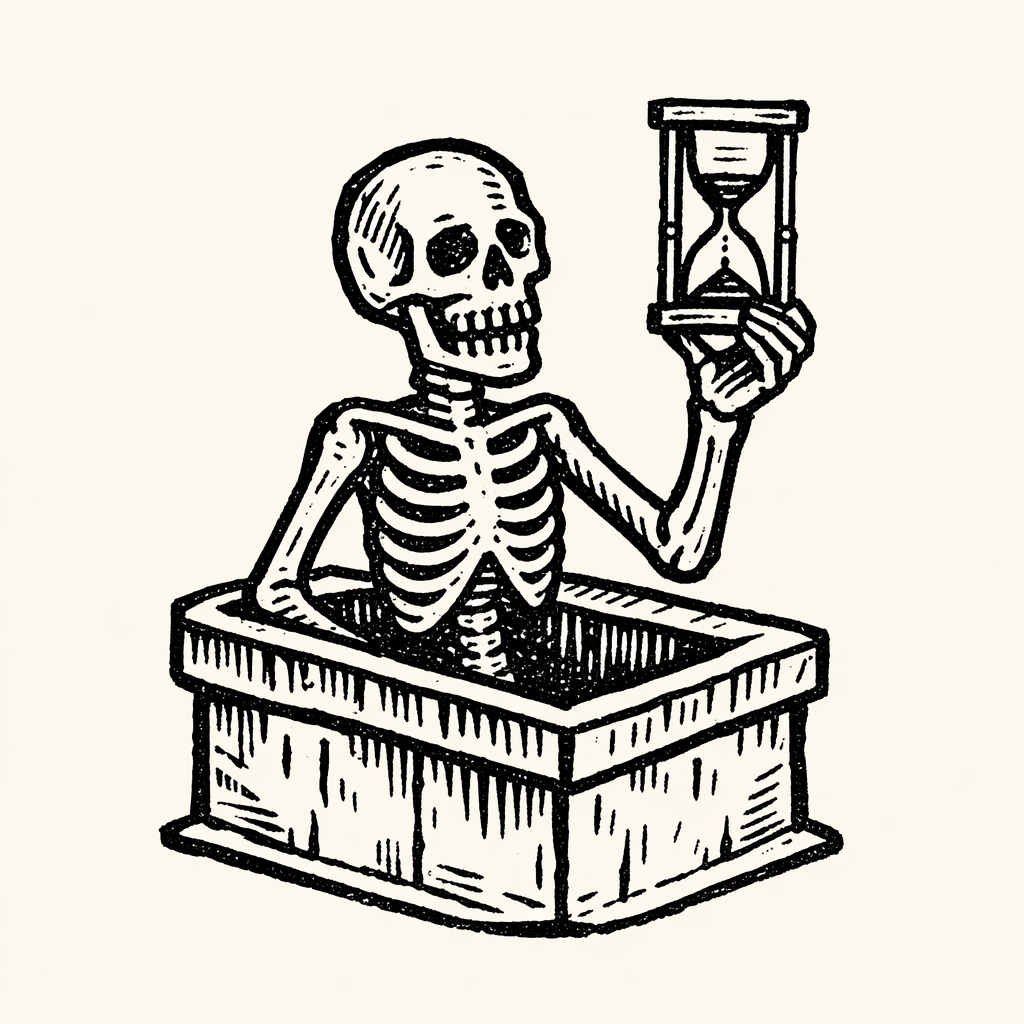
Death of Self
Ego-dissolution as image — the ending of an old self, not of the body.
The dream of one’s own death is one of the most universally reported and one of the most universally misread. Across nearly every dream-tradition on record — Vedic, Greek, Christian, Sufi, depth-psychological — the death of the self in a dream is not a premonition of physical death. It is the image the psyche reaches for when an old self is ending and a new one is being born.
The Jungian reading
For Jung, the dream of one’s own death — particularly when it arrives unbidden, peacefully, or with a sense of after — is one of the surest signs of the individuation process underway. The ego is dying so the Self can come forward (CW 8, “On the Nature of Dreams”; CW 9i, “Aion”). Death-of-self dreams cluster around: mid-life, the ends of long depressions, the start of analysis, the beginning of a long-overdue grief, the months following the death of a parent.
Hindu, Christian, Sufi readings
The Brihadaranyaka Upanishad (4.3) describes the dream-state itself as a “foretaste of death” — not in a morbid sense but as the place where the ordinary self is suspended and a deeper consciousness becomes briefly visible. The Christian formula “die to self” and the Sufi “die before you die” (mūtū qabla an tamūtū) describe nearly the same psychic event. Both traditions read the dream-death as a small enactment of the spiritual death-and-rebirth that is the work of a lifetime.
When this dream recurs
Death-of-self dreams in series almost always track an integration in slow progress — the old self being released over months rather than at once. Tracking the dream’s emotional tone (frightened → peaceful → ordinary) is one of the most reliable ways to follow the work.
If the dream changes
- From frightened to peaceful. The ending is being accepted.
- From dying-and-waking to dying-and-continuing. Integration deeper.
- From dying alone to dying with witnesses. The change has been named in waking life.
When to seek help
Death-dreams accompanied by waking thoughts of self-harm or suicide need immediate professional attention. The dream and the waking thought are not the same; if you are struggling, please reach out — 988 (US/Canada), 116 123 (UK), or the resources at /contact#help.
Related dreams and symbols
Pair with Ashes, [Cocoon], Tunnel, and the dreams of Death (your own) and A dead loved one.
What to ask in your journal
If death of self appears in your dream, sit with these prompts before reaching for an interpretation.
- What did you feel as you died — fear, peace, surprise, relief?
- What ended in the dream — a body, a role, a name?
- Was there an after — a 'second life,' a new room, a sky?
- What in waking life is asking to be released and is being refused?
- Did anyone watch your death? Their identity is often the part of you doing the seeing.


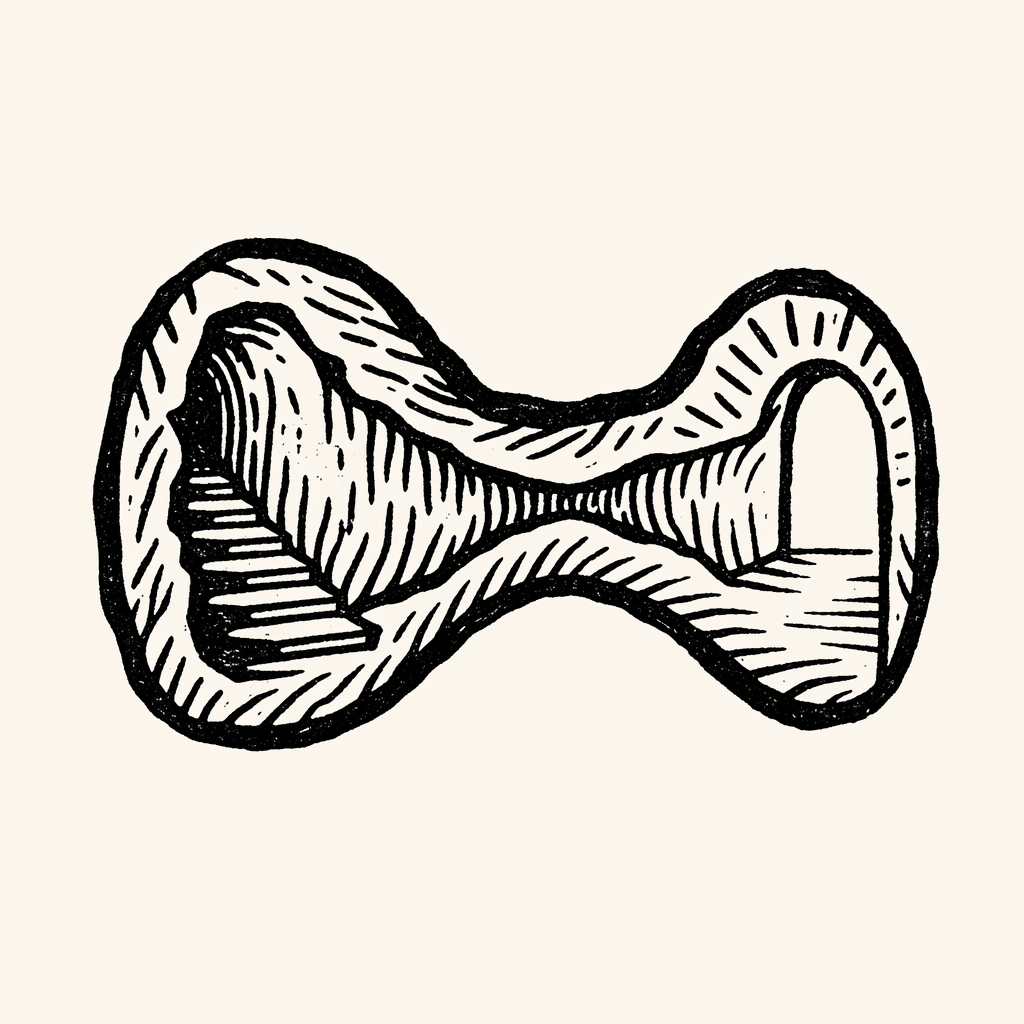
Frequently asked
Does dreaming of my own death mean I'm going to die?
No. Dream traditions across cultures and across two centuries of clinical research are remarkably consistent: dreaming of your own death is almost never a literal premonition. It is the psyche's image for an ending of *something* — a phase, a role, a self-image.
Why do I dream of dying so often?
Recurrent death-of-self dreams are common during periods of significant identity-change: divorces, career shifts, recoveries, ends of long depressions, the close of friendships.
What does it mean to die peacefully in a dream?
Often a sign that the ending the dream is announcing has already, on some level, been accepted. Among the most quietly important markers of psychological maturation.
What does it mean to be killed in a dream?
Note who or what kills you. A faceless attacker is the *shadow*; a known person often a part of you projected onto them; an accident is the unconscious 'taking matters into its own hands.'
Cited works
Each interpretation on this page traces back to one of these primary sources. Quotation with attribution welcome — see our methodology for how we cite.
- Carl Gustav Jung (1959) *The Archetypes and the Collective Unconscious (Collected Works, Vol. 9, Part 1)*. Princeton University Press. Trans. R. F. C. Hull.
- Carl Gustav Jung (1960) *The Structure and Dynamics of the Psyche (Collected Works, Vol. 8)*. Princeton University Press. Trans. R. F. C. Hull.Includes 'On the Nature of Dreams' and 'General Aspects of Dream Psychology'.
- Carl Gustav Jung (1962) *Memories, Dreams, Reflections*. Pantheon Books.
- Vedic seers (anonymous) (c. 700 BCE) *Brihadaranyaka Upanishad (4.3, on the dream-state)*
- Anonymous (attributed to Matthew) (c. 80–90 CE) *New Testament — Gospel of Matthew (chapters 1, 2, 27)*
- Muhammad Ibn Sirin (c. 8th century CE) *Ta'bir al-Ru'ya (Interpretation of Dreams)*Foundational text of Islamic oneirocriticism; later compiled and commented by ibn Shahin and ibn al-Naqib.